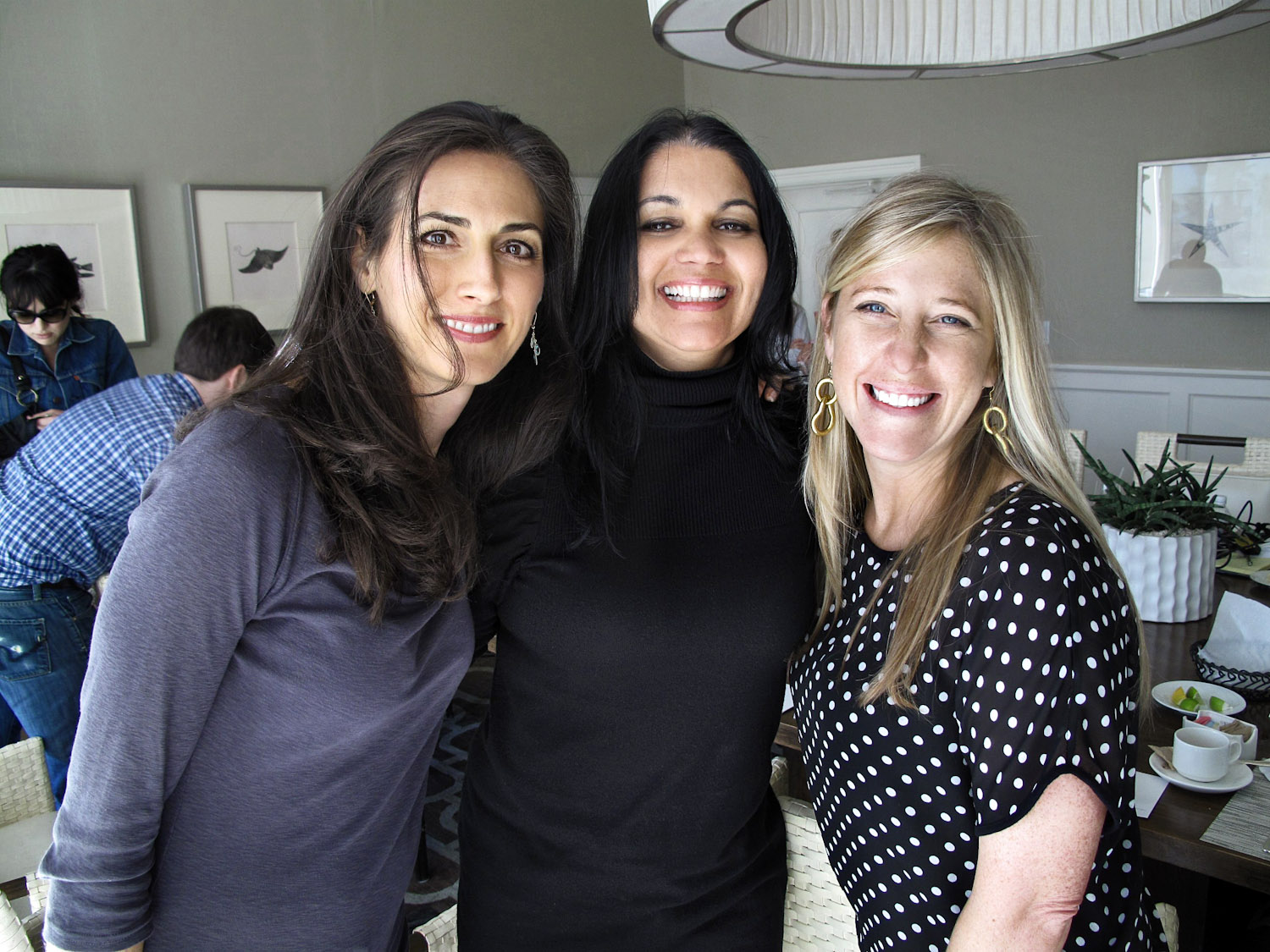
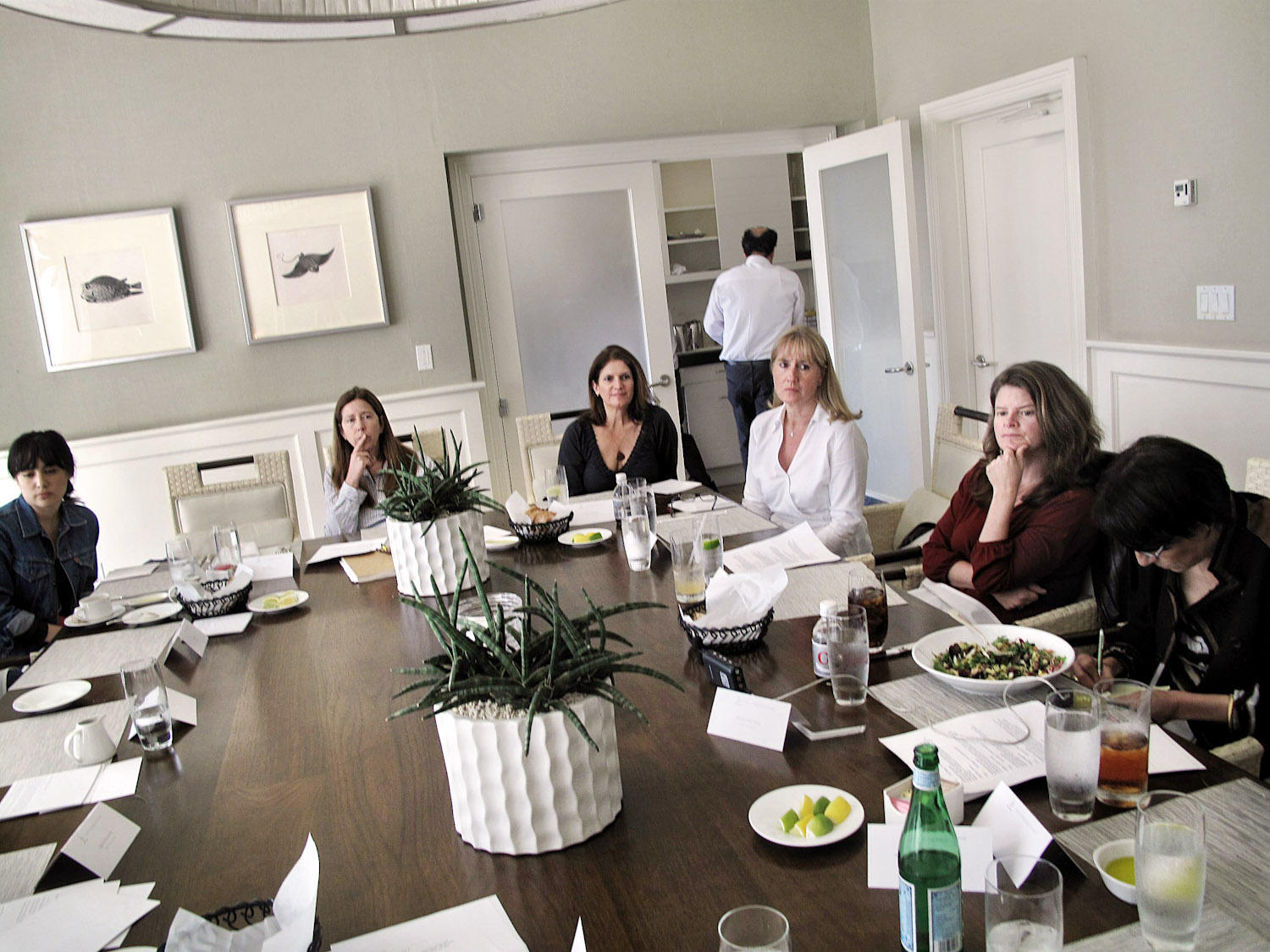
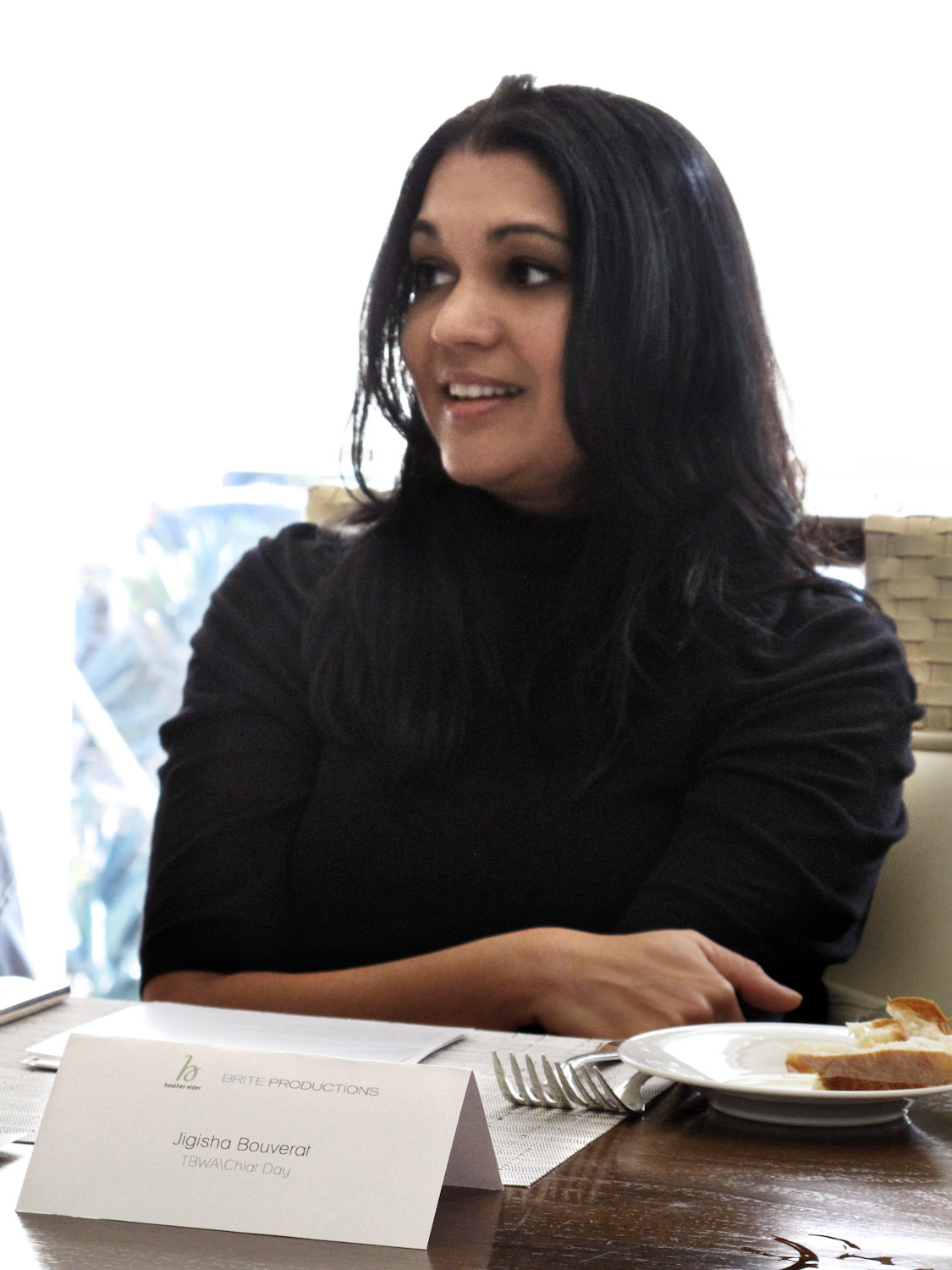
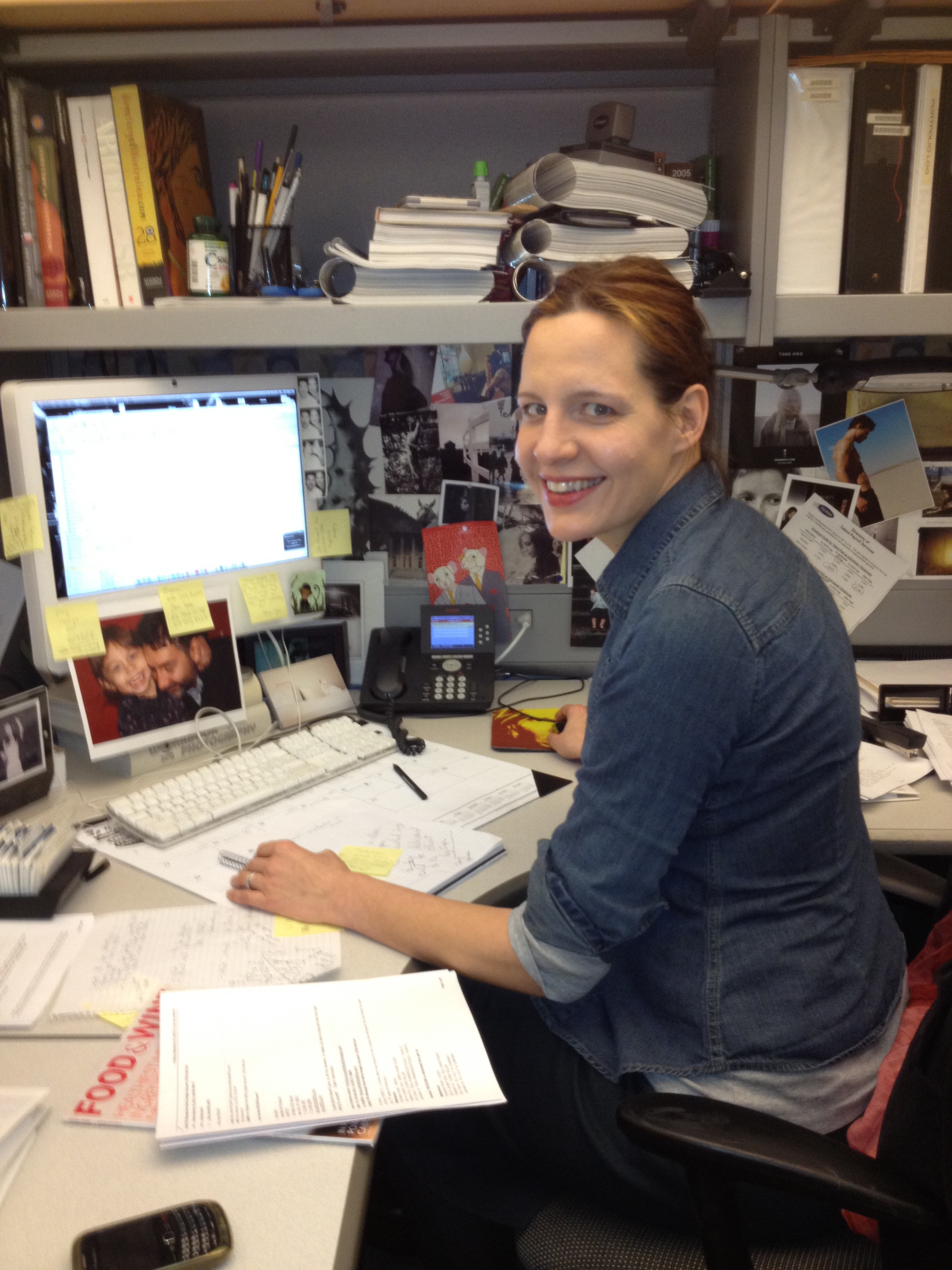
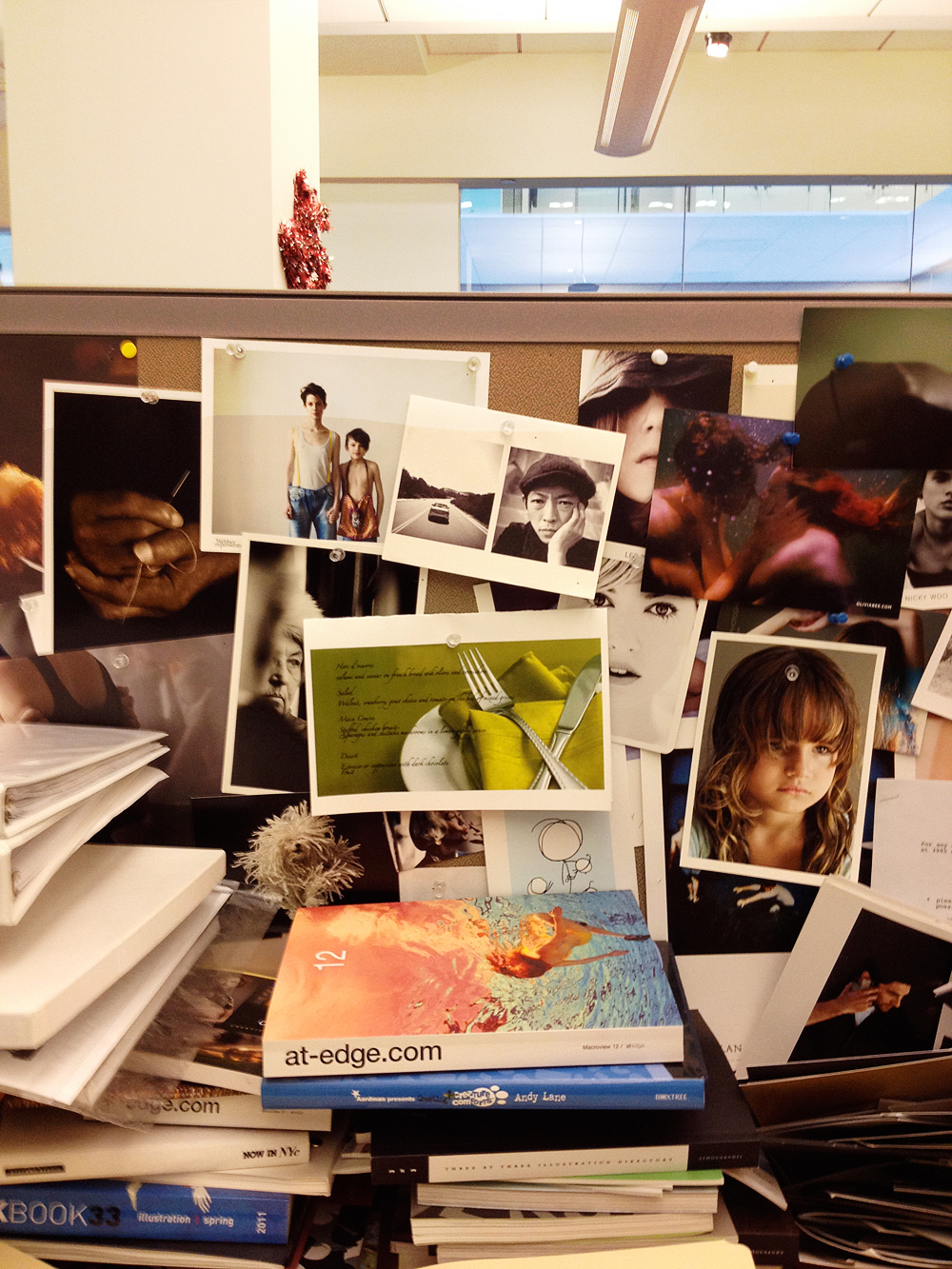
Wrapping up the conversation with Los Angeles Art Producers at our Community Table: Dessert

For those of you just joining us, welcome to Community Tablea series of blog posts sharing conversations held directly with our community leaders about top of mind industry issues.  Community Table was formed from the collective efforts of Matt Nycz and Kate Chase of Brite Productions and Heather Elder and Lauranne Lospalluto of Heather Elder Represents with the idea that there is nothing more powerful in our industry than education.

To see the last two week’s posts , the Appetizer and Main Course portions, and read the introduction to this series, please do link here.


——————————————–

As a reminder, each Conversation Starter was directed to one person with a general discussion ensuing. We decided this was the best way to present the discussion, to share the experience as close as possible to how it actually happened to bring you all the to the table with us.

The first question for the Dessert part of our meal was given to Jill Hundenski currently at Team One. This question launched an insightful conversation and a peek into the inner workings of the creative teams and the clear differentiation between the roles of the producers and that of the art and creative directors.

CONVERSATION STARTER #6:  Finding Creative Inspiration

Jill Hundenski, Freelance

Where are your creatives finding inspiration?  When they show you new work where are they directing you?  Are they utilizing photography websites such as At Edge,Le Book, Foundfolios and Workbook for their searches?  Or, are they relying more on individual photographer websites, micro-sites, blogs or other unique sites they frequent?

“Generally, those that are not using At-Edge, FoundFolios and Workbook are using word of mouth, this guy down the street who knows this guy,” started Jill. “It’s a lot like how Todd Selby was found. An art director found his blog and now he’s huge.

Blogs and social media are huge for creatives. They talk with each other and do a lot of research,” said Jill. “It’s kind of like, the more creative they are, the more they are sharing and following blogs and they bring it to us and we research. They bring cool art and music and things branch out from there.”

Jigisha continued. “Creatives are very competitive in their own industry and are always looking at who won awards and who is doing what ads. They ask us to research who is doing competitive work and who is shooting something.

The older creative’s are still doing CA and Archive and the award shows. The younger guys are totally out there in the social world and coming up with things that are way off our radar for sure. They’re talking about installations in Spain.”

“Photographers need to be creative and find ways to be interesting to creatives,” concluded Melanie.

With a question from Kate about the relevance of sourcebooks, the conversation looked at who is still using them and why. No surprise, art buyers still find them very valuable.

“It’s rare now that an AD would mention something they saw in Archive,” responded Jill. Melanie continued, “The search function still makes them relevant. I go to them first. I can’t start looking through blogs to find someone who shoots still-life.”

Andrea said, “It used to be that everyone got CA. But now it’s just me. Although I still have to sharpie my name on it because they want it and pass it around.”

There is still a place for the sites,” concluded Natalie Flemming. “And if you stop emailing and sending promos, you’re out of sight and out of mind. You never know who is going to look at you where, marketing is no longer linear so you have to be in as many places as you can afford

Andrea Mariash of David & Goliath very succinctly answered the first part of the last question first before getting right to the point when it comes to photographers shooting video. And the opinions were near unanimous. Photographers should really only show video if it is as strong as their photography.

CONVERSATION STARTER #7:  The Value of Photography

Andrea Mariash, David & Goliath.

It used to be that print was often a strong choice for clients when it came to promoting their brand.  Now they can choose from so many other vehicles for their communications and often times other media rather than photography is the chosen solution.  Knowing this, how do you see clients utilizing photography most nowadays?  And, along those same lines, how important is it that the photographer be able to shoot video?

In response to the relevance of photography, Andrea was clear. “Everyone can agree that there is a distinction between print and photography, because photography is used in many different mediums. And this is back to another panic button. Photography isn’t dying. I’m busier than ever because we are producing  photographic content for online. Digital is becoming a huge part of our world.”

Moving quickly to the question about video, “I just want to put something out there that is probably controversial,” started Andrea. “I am not a big fan of photographers doing video as a response to where they think the industry is going. I see a lot of photographers doing video because they think they have to, to stay ‘relevant.’ And it really hurts their brand.

Creatives will talk about it if it is not as strong as their photography. They’re used to seeing TV reels. Just like you don’t have to show everything you ever shoot, you don’t have to shoot video.”

“The big panic button was hit by PDN two years ago when they said that photographers had to shoot video,” said Matt.  “A lot of photographers thought they would be irrelevant if they didn’t.”

There are some photographers who understand film and have that cinematic quality,” continued Cara. “They have to learn new language. If they can learn it and bring their sensibilities to motion, then it’s brilliant. Creatives will talk about it after seeing their reel and it hurts them as a photographer if they show work that isn’t as strong as their photography. Art directors have choice of anyone in world.”

In retouching world, there were a lot of photographers who would do their own post and a lot who didn’t,” mentioned Kate. “And there were many who should not have done their own retouching. It’s the same threshold for video.”

“It’s more valuable for them to understand video. Art directors are not always sure how they want to use video, but they want it. There are so many different styles and sometimes they hire a DP to maintain the sensibility.”
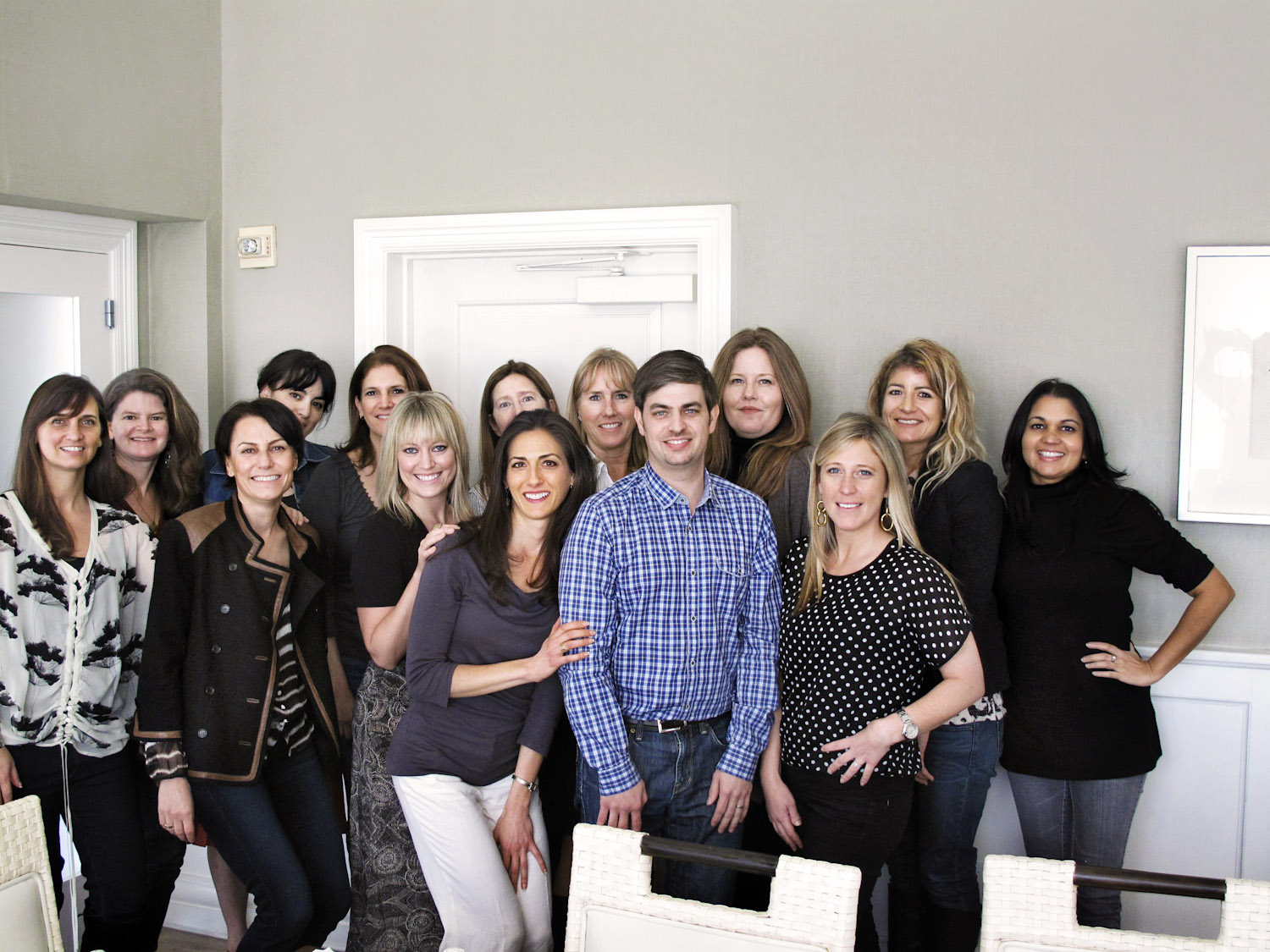
To close our lunch, we asked everyone to go around the table and give us one word or phrase that described our industry right now. The list put words to what we all feel and left us with admiration for the group we had assembled. Positive, open-minded and ready to tackle the challenges of an industry and world in the middle of many exciting changes and tremendous challenges.

Ever-changing

Exciting

Interconnected

Progressive

Dynamic

Ever-evolving

Expanding

Changing

Cross-ideation

Learning experience for everyone

Never thought at this point that I’d really need ‘to learn that’

I’ve said ‘what’ a lot in the last two years

Dynamic

Multi-faceted

We hope that our first Community Table event has fed you insights, inspiration and a sense of shared community that help move us all upward as an industry with a sense of empowerment and adventure.   Our village is a strong one, the more we connect and share, the stronger we will be become.  Stay tuned in the next few weeks for a summary of the conversation as well as a request for questions for our next Community Table event in NYC this spring.

Keeping the conversation going with Los Angeles Art Producers at our Community Table: The Main Course

For those of you just joining us, welcome to Community Table – a series of blog posts sharing conversations held directly with our community leaders about top of mind industry issues.  Community Table was formed from the collective efforts of Matt Nycz and Kate Chase of Brite Productions and Heather Elder and Lauranne Lospalluto of Heather Elder Represents with the idea that there is nothing more powerful in our industry than education.

To see lat week’s post , the Appetizer portion, and read the introduction to this series, please do link here.

——————————————–

As a reminder, each Conversation Starter was directed to one person with a general discussion ensuing. We decided this was the best way to present the discussion, to share the experience as close as possible to how it actually happened to bring you all the to the table with us.

The first question in the Main Course portion of our series was addressed to Patti O’Halloran of  The Designory .  It addressed which marketing options are the most effective.  Since she loves receiving eBlasts and promo cards so much she started the marketing discussion off with this topic and, as expected, opinions and insights abounded. Lisa Matthews of  Team One  joined in and 15 minutes later we had covered emails, iPhone apps, website design, personalization, the pros and cons of photo books and where the creatives are spending their time.

Art buyers love photography and looking at images and want nothing more than to see great work and get a beautiful promo they can pin up on their wall. What emerged from this oft-debated topic was not consensus, but rather differing opinions about a subject of which art buyers are extremely passionate. Rather than big surprises, we found instead shifting tides and a few trends, but overall a true love of good imagery and very positive feedback about all marketing efforts. It’s about breaking through the clutter, with images, medium and a personal touch that is, in the end, what they want and need their advertising campaigns to do.

CONVERSATION STARTER #4 : Marketing Over the Years

Patti O’Halloran, The Designory

Marketing over the years has gotten more complicated and more expensive for photographers.  Not everyone can afford to participate in every option.  And, not every photographer can participate in events such as Le Book. What advice do you have for a photographer that has a limited budget?  Understanding that it is a combination of many tools that will make up a marketing plan, which ones do you see as the most valuable?

CONVERSATION STARTER #5:  Emailer Controversy

Lisa Matthews, Team One

Over the last year or so, there have been many strong voices in the argument for and against email blasts.  We of course aren’t looking to stir that up again, but wondering if rather than send individual emails for each photographer every month, would you prefer that a rep group send one email with new work and announcements from each photographer; like a newsletter?  Would you take the time to read it or honestly will it be too much to digest?

Here are how Patti and Lisa got the conversation going:

“I love eBlasts because I can multi-task – be on the phone and look at work as it comes into my inbox,” started Patti. “I polled all the art buyers in the office and they love them as well.” (Great to hear) “I also love the postcard. One strong image. If it’s a nice image and something I haven’t seen before, it goes up on the wall.”

And something that can’t be emphasized enough, “Most important is an easy to use website that allows me to quickly create a PDF to email to someone else—we do screen grabs of everything,” continued Patti. “Sites with too many bells and whistles don’t work. The simpler the better. I just want to see the work and pull what I need for my creatives Or an iPhone app that allows this—if it’s in your pocket, that’s amazing.”

Jigisha picked up the discussion about mailers with the suggestion that the image and medium selected for the mailer can make all the difference. “The direct mail can be more enjoyable, special, and it should be really nice so we’ll want to put it up on the wall, either conceptually smart or really beautiful. Their choice of image for a promo is a big deal.

People are doing beautiful promos right now. They’re making them special. The ones I’m getting right now from the agents and photographers are gorgeous. The newspaper ones are stunning.”

But back to eBlasts. “I like them and I don’t like them,” offered Melanie. “A lot of time I have to delete them every morning. But the email trend has helped cut down on the mailed promos. It now takes a week to get what I used to get in a day. I feel better about the impact on the earth.

“I’m the total opposite,” said Kristine. “I love promos and am guilty of not opening every email blast. Promos have always been a favorite part of my job. I just love them.”

It was clear from the various opinions, that this is a very personal preference. The thread that ran through the conversation was a genuine enthusiasm for beautiful imagery and an appreciation for the work that goes into the mailers. “I used to have a big bin full of promos. I would try to go through it and look at every single one because someone spent a lot of money and time creating them,” continued Jigisha. “Over time, my email volume has grown and the direct mail has gone down to a handful a day. And I’ve gone to enjoying the direct mail vs. the email because it’s more enjoyable to take 20 minutes to enjoy it.”

 “If I get a promo, I will look at it. I worked for a photographer and I know how much goes into it,” said Andrea.

And in conclusion, Matt remembered an important conversation he’d had with an art buyer. “I spoke with an art buyer in NY who said she throws out 80 – 90% of what she receives. But because of that she said never to just send her one because she always looks and she’ll remember the photographer’s name. You send me two and one day I meet you or you call me and your name is going to ring a bell. I may not know why, but it will.”

To me, this was a relevant piece of advice. In Rob Haggart’s piece last year about promotion, everyone said they had fewer and fewer print pieces coming in and too many emails. So if you really want to reach someone, send them something in print that is relevant to what they do.”

And in conclusion, one final bit of advice from Cara.One thing the creatives ask us over and over is how they can make the eblasts stop. The eblasts should be targeted directly to the art producers.”

The conversation then turned to newsletters, books and personalization and the effectiveness of a unique format. Heather started off with a question about the effectiveness of the agency newsletters. “If we don’t have time, we don’t have time,” said Melanie. “But if everyone would do it once a month, then it would be something special.”

“If you send just one beautiful image, it’s enough. I don’t need an expensive book. I’m not going to rip out pages and put them up, but a card will go up,” offered Jill. In keeping with the conclusion that on some level it comes down to personal preference, some others had the opposite feeling about books. “Books are my favorite. I have a bookshelf. A book lets me see how they edit, what their eye is and what they’re putting next to each other.”

We all know that in marketing, research and a good list is key. A targeted list and a personalized approach can then be the most effective way to connect with someone with whom you would really like to work. “I know it’s a lot of work. But if you pick out 20 people whose attention you want, it will get my attention,” said Jill.  Another art producer chimed in, Personalization is also huge for me. If they write a note I pay more attention.” And finally from Andrea, “I love when they hand address the envelope. It will make me open it.”

To conclude, Heather asked a question we all wonder about. “If you’re not getting email blasts and cards from people, are you assuming they are dead in the water and not shooting? Do they just fade away?”

“Yes, especially if they’re not connected to a rep who is sending out promos on their behalf,” responded Jigisha.

“What was said about reps means more today than ever before,” said Kristine “We rely on you to cull down the best of – both people who know how to handle the camera and those who help them with the overall production. We can hire a photographer a without a rep and of course we would do that, but in the scheme of all the things we need to consider, who the entire production is team matters.”


——————————————–

Be sure to tune in next week to sample the Dessert of our meeting where we will be addressing Finding Creative Inspiration, the Value of Photography, the State of the Industry and the One Word that best describes our industry.

If you have anything to add to the conversation, please do email Heather Elder Represents or Brite Productions, we would be thrilled to keep the conversation going.


Thank you again to all of our participants, Heather Elder Represents, Brite Productions and Alison McCreery of POP Blogfor making all of this sharing possible.

Introducing Community Table: a Conversation with LA Art Buyers. Part I: The Appetizer

The Community Table

Welcome to Community Table – the first in a series of blog posts sharing conversations held directly with our community leaders about top of mind industry issues.  Community Table was formed from the collective efforts of Matt Nycz and Kate Chase of Brite Productions and Heather Elder and Lauranne Lospalluto of Heather Elder Represents with the idea that there is nothing more powerful in our industry than education.

So, of course it is no surprise that Community Table was inspired by LeBook Connections, which was founded with the vision of bringing together the worlds top reps with buyers and creative’s from the worlds leading agencies and clients for a day of sharing and connecting.  It was in this context of discussing the inspirational nature of all of us coming together in LA that the idea was launched for Community Table – the timing perfect to foster an in-depth conversation about top-of-mind industry issues and to then share the results-of with our larger community via a shared blog post.

Thus invitations were sent, RSVPs rolled in, questions were drafted, a beautiful spot for lunch was reserved and a tremendously inspiring conversation ensued with topics ranging from what art buyers are looking for at Connections, who from the agencies actually attends the event, the rise of and value of pay-to-play events, one of the most effective ways for photographers to get work. The often debated email vs. direct mail discussion made an appearance as did insights into where creative’s look for inspiration and work, thoughts on photographers shooting video and over dessert, a one-word summary from each of us to describe the current state of our industry.

All agreed it that there aren’t enough opportunities to get everyone together and we can’t wait for the next one. But for now are very happy to summarize what we learned with our larger community.

And, with that, we welcome you to our table.

********************** 

Each Conversation Starter was directed to one person with a general discussion ensuing. We decided this was the best way to present the discussion, to share the experience as close as possible to how it actually happened to bring you all to the table with us.

The first questions were directed to Cara Nieto from DeutschLA about how she defines a successful event, what she enjoyed the most and what was most effective for introducing her to new talent and reacquainting her with familiar talent?

CONVERSATION STARTER #1: Le Book’s Effectiveness

Cara Nieto, DeutschLA

How would you define a successful Le Book event?  Do you think the event met these criteria?  What elements of Connections did you enjoy the most?  What were the most effective in introducing you to new talent and reacquainting you with familiar talent? 

Here is how Cara got the conversation started:

“I consider LeBook successful if I discover new talent or someone new to a roster. I may have discovered someone new to a certain roster, but no one that I hadn’t seen before.  I don’t get to talk with every person, so it may not be that there wasn’t any new talent there at all, but it’s obviously difficult to find that with everything one has to look at.

For the booths I did make it to, I asked to be shown one or two things I hadn’t seen before since this what I’m looking for—if someone is new to the roster or has something really new and exciting. It would be helpful if, at each booth, new talent to either their roster or the industry were highlighted.

I did like the big agency books with five or six images from each photographer, especially the big agencies. It’s daunting to ask to dig one out from the bottom of the pile.”

“I loved it. The chaos. Seeing all the portfolios stacked up all over the place,” added Jigisha Bouevrat of TBWA\Chiat\Day. “I think if you spread it out, you lose that energy, that charisma that is in there.  And because of that I found five I’m excited to hopefully work with. And we do a lot of research and have people come in. And these were five who were not on my radar at all.”

“I go straight to the music stand, assuming that it must be the best of the bunch right now,” added Lisa Matthews from Team One. “It’s easier to flip through and read—it really works. So maybe that’s the idea. You switch it out every 45 minutes. When I see a stack of books in the corner, I say ‘give me three.’ The big monitors with five images from each photographer also draw you in. You can get a good idea very quickly of the artists at each rep.”

“We are also most interested in personal work,” adds Cara Nieto. “Reps could encourage their photographers to have a personal project or test for their reps to share at the event that they’re excited about and that is catered to us.

But quite honestly, what I enjoyed as much as looking at the work was seeing the reps I don’t usually see, from San Francisco and New York, and catching up with them.”

Jigisha echoed the same sentiment. “I loved that I can network not only with the agents, but that the photographers showed up at the end and that I got to see all the art producers and the other people that are part of my community that I never get to see and bond with. We tend to be and feel isolated in LA and it’s great for us to get to spend time together.

I also love that it’s on the West Coast in LA because I think we need something that elevates us and makes us part of this industry. I love that and I don’t ever want this to go away. I call it our industry day, but it should turn into an industry week.”

The second set of questions were addressed to Melanie Tongas of RPA.  And in keeping with the conversation-starter spirit, it quickly turned into an animated group discussion that ranged from getting art directors to Connections and to portfolio shows, how digital and motion are impacting art director’s availability for looking at photography, and why a fashion and celebrity-driven event like Connections is relevant to a wider audience of art buyers.

CONVERSATION STARTER #2:  Le Book’s Attendance

Melanie Tongas, RPA

How much does your agency encourage attendance to an event like Le Book?  Do they encourage the entire creative department to attend?  Did any of your creative’s attend the event?  If not, why do you think that is? 

Here is how Melanie got the conversation started:

Since LeBook came to LA last year, I along with Ginnie Assenza, who I co-manage the department with, encouraged our department to attend the event, as we believe it’s important to connect with the photography and advertising community, and keep abreast of the latest trends in the industry. Most of us attended last year’s event and loved it, and because of that found a way to fit it into our incredibly busy schedules this year.

Being that we’re a predominantly automotive agency, we intentionally narrowed our focus for so many years to know the automotive reps and photographers because that’s who we were hiring and it was the best use of our time.  But with a handful of growing non-auto accounts where we’re finding ourselves commissioning more fashion and celebrity photographers, the LeBook event was a perfect venue for us to meet new reps and see new talent, as much as it was to visit with those we’ve worked with over the years.

As art producers it’s our job not only to source out the right talent for any particular project, but to keep expanding our talent library with new talent. That’s part of what this event is all about. It’s about seeing who’s out there so if we have an automotive project that requires some fashion, we’ll know who’s out there.”

Freelance art producer, Jill Hundenski said that their responsibilities have expanded as well. “We have to stay on top of who is shooting print and motion. Art Directors come to us to ask who is doing both.

“I feel like LeBook should also really be targeting the digital and print producers because we are crossing media. Maybe broadcast too, but definitely digital and print,” suggested by Jigisha and echoed by Lisa Matthews, “Integrated production is the new buzzword. Le Book should grow it into an option.”

“Just having a couple events is not enough to draw the art directors. They need to have more to attract them,” suggested Melanie. “Successful ideas could be held throughout the week.”

“They could also attract higher attendance if it were more centrally located on the Westside,” added Cara Nieto. “They might be catering to fashion and celebrity businesses, but the agencies are on the Westside and Hollywood is the mecca in traffic.”

“So it would be nice for them to partner with someone to expand the event more,” suggested Heather. “This being their second year in LA, I’m sure they are trying to figure it out and are still learning what people are craving and need here. I think it’s recognizing the power of this week and building on it.”

“One thing to add. The events/presentations at LeBook (branded content, etc.) have nothing to do with photography,” observed Jigisha. “It’s about a different way of advertising and marketing and working with clients and so much more strategy than the creative development. If they want to get art directors there, they need to rethink the presentations. And also not do them during the day. I didn’t get to look at books until 5:30.

On another note, I would spend my money to go to NY to see the European agents at NY Connections.”

The final question of this first installment of Community Table was on the rise of Pay-to-Play events. Directed to Jigisha Bouverat of TBWA\Chiat\Day an interesting discussion developed .  Some see the value outweighing any shortcomings and others felt it was somewhat unfair to photographers to pay to see them when they could simply make an appointment. All were agreed though, that those getting to know the photographer,  is paramount and this is one opportunity for doing that and these events are very beneficial to emerging photographers.

CONVERSATION STARTER #3: Pay to Play Events

Jigisha Bouverat, TBWA\Chiat\Day

There is a rise in the “pay to play” events where photographers pay a fee or pay into a program that allows them direct access to creatives and or art producers.  The organizers sometimes offer compensation to the reviewers in an effort to elevate the seriousness of the event and show a respect for the reviewer’s time.  What is it about these types of events that are most successful and what do you feel could be improved upon?  Do you see this as a positive trend and if not, why?

Here is how Jigisha got everyone thinking:

“In the past few years I’ve thought about this a lot because I’ve needed to strategize as my role as an art producer in an ad agency and as a department head. With regards to the pay-to-play events, I’ve thought about what is a conflict of interest and what is acceptable.

At first, I would get an offer to come look at and critique portfolios that came with a stipend. I knew the people putting the shows together were also charging the photographers to have their books reviewed, but I would do them. However, in the last couple of years, the books that came to me were photographers who didn’t need my critique, who were already quite successful and could call me and get a showing

Acknowledging that the pay-to-play events present a valuable opportunity to emerging photographers, Jigisha continued, “Then alternatively, there have been other reviews I’ve done for beginner and emerging books where I could be constructive and helpful. In this case, my time was worth it for them, if the photographer uses it as a critique to make their book better.”

Based on an evaluation of how much each side gets out of it, Jigisha now only participates when she feels it is not a conflict of interest. “I made the decision not to participate in events where the caliber of photographer is good enough to come in to my agency and be seen. But I will participate in the ones where I can use my experience to help them and they can maybe do a little more work and see me at my agency the next time and not have to pay.”

Several art buyers however highlighted the value of actually meeting with photographers, “Personality is huge,” added Jill Hundenski. “If the creative call goes downhill, I take them off the list. And on that same note, if you have 15 minutes with a photographer, you can really delve into what they love working on and get a better understanding of who they are, more so than looking at their book or hearing from their rep.”

“I find the pay-to-play events successful because I have the chance to meet with new photographers and I love one-on-ones with photographers,” confirmed art buyer Andrea Mariash of David & Goliath. “I’ll go into a portfolio show and everyone is standing around the photographer trying to figure out what they have coming up that they could use them on. It absolutely makes a difference.”

And echoing what we often hear from art buyers, Patti O’Halloran of The Designory summed it up with “Yes, it’s always good to meet the photographers because you may end up spending a week with them.”

********************** 

Be sure to tune in next week to sample the Main Course of our meeting where we will be addressing Marketing over the Years and the ever present Emailer Controversy.

If you have anything to add to the conversation, please do email Heather Elder Represents or Brite Productions, we are excited to keep the conversation going.

Thank you again to all of our participants, Heather Elder Represents, Brite Productions and Alison McCreery of POP Blog for making all of this sharing possible.

Let it snow. Please! What you need to know to produce photos shoots in the snow courtesy of producer Steven Currie

© Andy Anderson-www.andyandersonphoto.com

I have known Steven Currie for years and I can say with confidence that he is a top notch producer.  Nothing flusters him, not even the weather – or lack there of.  He is resourceful, creative and one of the best problem solvers out there.  So, when he sent me the post he wanted to submit for the blog, I was not surprised that he chose to write about producing in the snow during one of the warmest winters in history.

Here is what Steven has to say.

“Talking about production on snow related projects seems ironic during one of the warmest winters in United States history.  But our clients have needs and it’s our job to fulfill them. I have learned over the years that there are four key aspects to working on or in snow.  While they seem obvious, they are crucial to the success of the shoot.

TIME

Working in snow takes 25-50% more time than working on dry land. Let me repeat, working in snow takes 25-50% more time than working on dry land.  Whether it’s transportation, lighting, catering, communication, safety or simply walking from point A to point B, it just takes more time. Managing a client’s expectations regarding this is imperative.

TRANSPORTATION

Park the SUV, you are going to have to find another way around.  Whether it’s a snow cat, snow mobile, helicopter, dog sled, skis,  or in the case of shooting Simon Dumont for Oakley (Blake Jorgenson Photographer) hiking 1,000 feet straight up to the top of Highlands Bowl at 12,000 feet for that top of the world look.  (It’s amazing how many agency and clients pass on the opportunity to observe this kind of shot.)  If you can utilize a snow cat, it’s the most efficient.  You can move 12 people and equipment comfortably and utilize it as your motor home once you reach your location.  But keep in mind cats go about 10 miles an hour, so when you need to get to that location that’s “only” 20 miles away, realize it’s going to take …. more time.  Snowmobiles are much quicker, but moving 1 passenger at a time is not efficient.   They are better utilized for short hauls to move things around the location, not for transporting crew long distances.   But If money’s no object go with the Helicopter, it’s just cooler.

SAFETY

Whether it’s  avalanche danger, moving machines,  or the extreme conditions, it’s safest to have someone solely concentrating on everyone’s safety, and not  distracted by another role.  Wherever your location, more than likely you will be assigned someone for your safety in extreme conditions.  Most resorts will assign you a patroller,  a heli  or cat operation who will have someone solely watch for the safety of the crew.   If they don’t, ask for one.

As far as safety goes, be sure to remember that in order to find snow you are more than likely at a high altitude and it’s going to be cold.  It is important to realize that altitude equals dehydration.   So, if you can only carry one thing with you, make it water.  Most clients and agencys seem to come from sea level (where it’s safe and warm) so when they come to the snow and altitude,  their bodies need time to adjust. Altitude sickness is simply dehydration.  So have plenty of water on hand and constantly remind people to drink it.  More than any type of production,  I have “lost” more crew/agency to altitude sickness.  Trust me, it is not pretty.

PERMISSIONS

Because of the particular places that snow falls, permissions are usually more complex than our friendly summer counterparts.  Most US ski resorts sit on Forest Service land, so it’s not enough to just clear things with the resort.  More than likely you’ll need a Forest Service Permit.  And since it’s the Department of Transport’s job to keep the roads clear and you are trying to showcase a cars capability on snow, you are more than likely going to have to use private property.    If you see a road with snow on it, more than likely it’s not public.    Local scouts will know where the snow is and who to speak with to get access.  In rare cases you’ll find snow on public roads and it will save money if you can find them.

CREATIVITY

And finally, if you can’t find the snow, make it!  There are many options for creating a snowy effect in your image.  They are usually very costly and it takes more …. Time!   (You’re getting the idea.)  The most effective way to make it look cold is a snow flake filled sky, but who can schedule a shoot day around a forecast for snow?  There are several products that will make it snow on a clear day.   I find the most effective to be a bio degradable starch product that can be blown with fans.   It falls to the ground slowly, making it look like Christmas in Norway.

Over my 10 years of living in the mountains, I’ve really enjoyed the challenge of working in and on the snow.    Some of my most memorable projects have been working in the white stuff.   So for a few more months, until we get our feet back on the ground and back to the “easy productions”,  don’t be intimidated by the thought of shooting on snow.   Just put a little more time in you plan.”

Thank you Steven for sharing your thoughts and experiences with us.  If you would like contact him directly or see what else he has worked on, please link to his site:  stevencurrie.net.

Art Buyer Insider: A celebration of art buying featuring Ilona Siller of DraftFCB NY

Ilona Siller - Draft FCB/NY

So often people want to know the story behind the photographer or the creative on a project, but what about the art buyer?  Art buying is such an interesting job to say the least. The people I know in this position come from such rich and diverse backgrounds and rarely do they follow the same path to become one.  Understanding this, I thought it would be fun to start a series of interviews with art buyers that don’t just address how to get their attention, but instead celebrate the art buyer but for who they are, where they came from and what is important in their life.

To ensure that these interviews were a bit more substantial, I enlisted the help of Alison McCreery of POP Blog.  Her interviews are always compelling and offer a unique perspective on the talented individual featured.    She was a perfect match for Ilona Siller, Associate Art Producer at Draft FCB/NY, our first interviewee.  They met in NY one winter afternoon and shared lunch and some conversation.

For those of you who do not know Ilona, find her on Facebook, she is a joy to follow.  Her Russian heritage, love for her daughter and connection to her city make her perspective on life so totally unique.

Here is what she shared with us.

What was your path to becoming an Art Buyer and what was that first moment of inspiration when you knew you would work in a creative position?

My background is a degree in psychology, casting and making a feature documentary film. I came to art buying by an accident, but it is truly is my calling. I am one of those people that is not really creatively amazing at anything, but I have a gut intuition that is dead on about what IS creatively amazing. I guess my only talent is to know what is good.:)

The first day in art buying department my boss Lucy Raimengia asked me to do a search for some potential photographers for AVON job. I wanted to impress her so I spent hours looking at every single art agency link I can find. I remember thinking to myself: “Wow, this is my job. Sitting in an air conditioned office, looking at beautiful art. AND I get a paycheck?!?!?”. I was nearly in tears at how lucky I was. Now, if I ever get jaded and attempt to complain…I always bring myself back to that first day and the sheer wonder in my eyes.

What accounts are you currently working on?

Lots and lots of babies lately. Gerber, OREO…J

Growing up, what were your creative interests?

I lived in my imagination. I didn’t quite know that real world existed until I was about 16. What a rude awakening that was.

Did you ever consider becoming a photographer yourself?

No, I am not so naïve to think that all it takes is a good camera. And I am too lazy to invest the time and energy that it requires.

I do believe however that on occasion, and without training, you can take a brilliant picture with your I-phone if you have a magical connect with your subject. The best pictures I’ve ever taken are of my daughter simply because we have an unspoken bond.

Where do you look for inspiration? Stay inspired?

I live in New York. Every day is a sensory overload of faces and colors and textures. I like to take mental pictures of all that and then listen to music on my I-pod. It’s kind of like making my own music video…daily.

Do you have a personal aesthetic that comes through in the photographers whose work you are drawn to?

Absolutely. It  is to learn to separate my personal taste from what the client needs and wants. I also believe in meeting photographers for a sheer fact that a good percentage of the experience is what kind of person photographer is. They can be brilliant but hard to work with which is very unfortunate.

What do you think is important to do in your personal time to keep you inspired at work?

Play music often, dance alone, befriend a kid.

What do you love about your job?

That it inspires more way more than drains me.

What one word describes your style as an art buyer?

Humbled

Ilona Siller

 If you could change one thing in the creative industry right now, what would that be?

More human contact, less email. But that is naïve because I will get nothing done.:)

If you could tell photographers one thing, what would it be?

When you call me for a “meeting” know that I am much more honored and excited to meet you than you are to meet me.

Words of advice to junior designers/creatives?

I am here to make sure that your vision comes to life, so every detail in your mind is important to me.

One promo currently up in your office?

That’s funny. My office should be called “The promo”.

Ilona Siller

What are you known for at Draft?

I have a very dry, Russian, “I survived communism” sense of humor that has a potential to get me in a lot of trouble.

How do you describe your job to your mother or someone not in our industry?

My mother: “So, do you actually shoot the ads?”

Me: “No”

My mother: “Do you come up with the concept?”

Me: “No”

My mother:” So, what do you actually do?”

Me sheepishly: “I am not quite sure.”

Art that you find most inspiring?

Music. I am a long time fan of Sigur Ros, Bjork, Massive Attack and Radiohead. My new New York discovery is Alastair Ottesen.

What at the moment do you see happening in the culture that you find inspiring or interesting?

Not to be a downer, but I actually think that with all the insane technology out there, we kind of forgot to stare and talk to each other, which is where most creative inspiration comes from. Sorry, what was the question? (staring at her Blackberry):)

Favorite films, books, music, dance?

Please refer to my Playboy layout for all the “likes” and “dislikes”J. Yep… there is that sense of humor and a call to HR.:)

Favorite way to spend a Sunday?

Lingering breakfast with chaos that only comes from “family”, wondering the city with my 3 year old while discussing relatively grown up subjects, late dinner with my husband, bottle of wine  (each) with a couple of friends.

Latest discovery?

http://www.popfoto.net/


Thank you Alison McCreery of POP Blog for all of your help making this interview possible.