A week in NY – a recap of Le Book and Community Table.

What a week.  Truly. Thank you NYC for being such a great host.

It started off with our second installment of Community Table, a little birthday fun and then two full days of Le Book Connections NY.  By the end of it all, I had no voice, was 5 pounds heavier and was asleep on my feet.

But, it was all worth it – every second of it.

The week started with a our Community Table event at The Crosby Street Hotel.   Matt Nycz and Kate Chase of Brite Productions joined Lauranne and I in hosting our second round table with area art producers to discuss the issues top of mind for many photographers in our community.

We hosted 12 seasoned art producers from various agencies.  It was an incredible site to see such dynamic and creative women sitting around the table ready to share their experiences with those in our community.  Once again, Matt was the only male in the group and we loved him for that.

We talked about so many different topics such as marketing, agencies hiring producers, pro bono, client’s understanding of usage, cost consultants, social media and promo trends to name a few.  We look forward to sharing the conversation with everyone once we transcribe and edit our notes.

We realized when it was over that a perfect evolution for The Community Table would be to next time consider talking about just ONE topic. Maybe production, maybe estimates, maybe usage to name a few.  That way, we can truly discuss the many layers of the topic without the need to move on to the other topics.

We hear over and over that the art producers enjoy this event not just because they are excited about the conversation, but because they enjoy seeing each other.  We feel the same way.  It is rare that we can see each other out of the work setting and it felt very much like a community.  Exactly the point.

The Le Book event proved just as powerful.  Two full days of non stop connections.  The energy was high and the creativity flowing.  People were excited to walk the room to see old friends, make new ones and see what is happening creatively out there.  Once again Le Book Connections provided a casual environment for agents and clients to meet and share work.

Here are some of the highlights of the event:

•  The weather was perfect.  This made a huge difference in attendance.  As well, I heard a rumor that Le Book worked hard to space out the attendees so that there was never a HUGE rush of people but rather a steady and manageable stream.  If that is true, it worked!

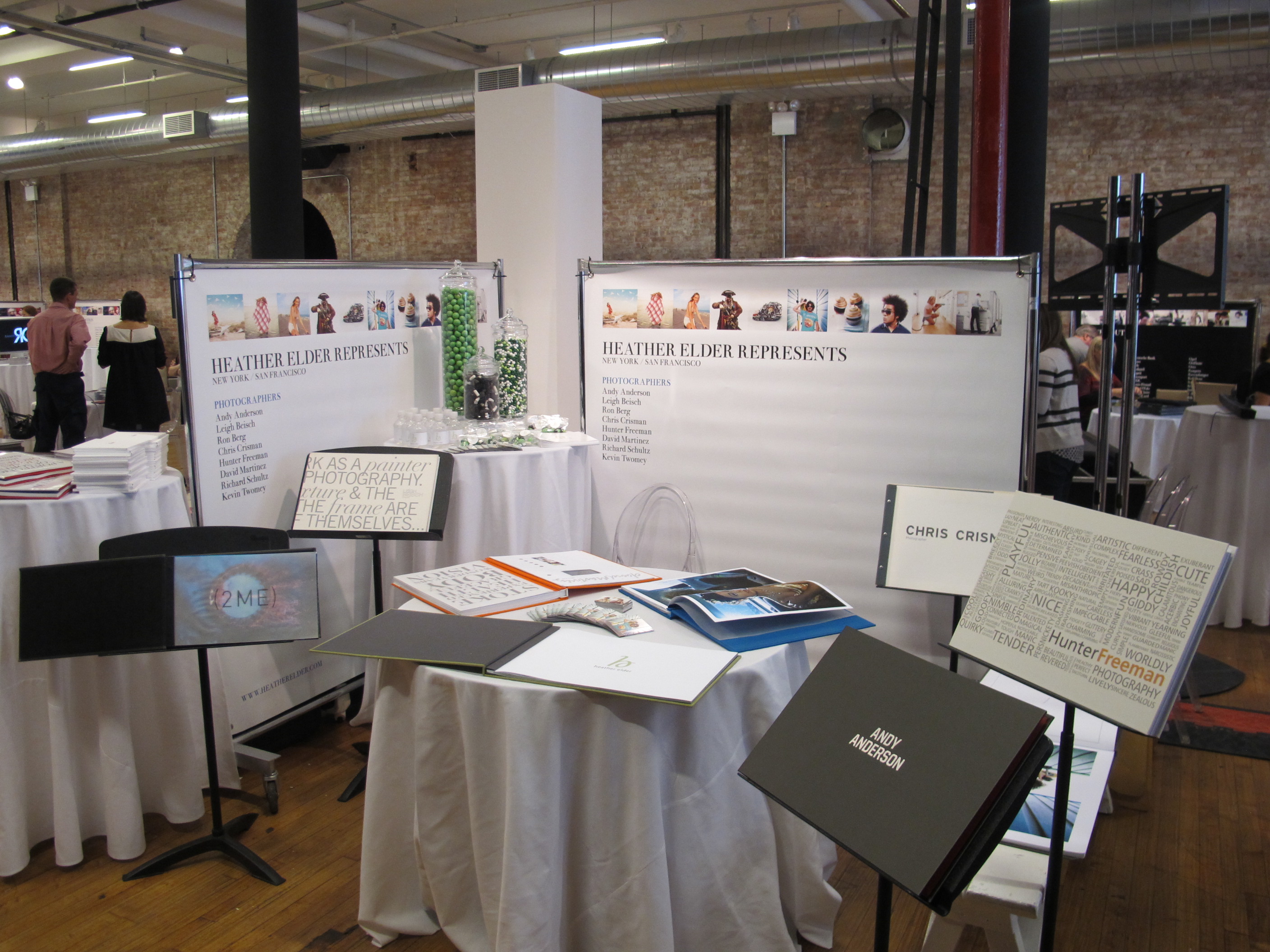
•  This year we brought with us our GROUP PORTFOLIO.  This was  big hit.  The power of it was that we divided the book by SPECIALTY and not photographer.  People could then review the portfolio first, find the work they liked and then ask to see the photographer’s own portfolio for more.  This was the perfect answer to the endless question, “What do you have that is new?”

•  A few of the photographers in the group had new portfolios which were fun to show off.   Many clients who came by recognized that they were new – this made all the effort in creating them worth it.

•  Once again, we met MANY contacts from client direct companies.  This is VERY important to us because we find that these targets are hard to come by with regular channels.

•  Our portfolios stood out among the sea of iPads and black leather portfolios. We had colorful covers that attracted people to our table. And, the interiors were well designed and always a crowd pleaser.  And, those malt balls were once again a hit.  Funny how that works.

•  Le Book does a great job of attracting people from all over, not just NY.  It was so wonderful to see our friends from Chicago, San Francisco, Minneapolis, Las Vegas, Los Angeles, Miami, Texas and of course New York.

•  The cocktail party at the end of each evening was, as always, a hit.  This year, we were in a section that was not very lively so to attract people, we decided to hire a bartender (a very hot bartender!) to mix martinis.  Between the shaking sounds of the shaker and his nice biceps, we had men and women racing to our booth.  Money well spent and a tradition we will surely continue.

•  The cocktail party is truly one of the best parts of Le Book. The energy changes slightly and made me think (well Kate Chase put the idea in my head) that Le Book should consider changing the time to the event to later in the afternoon through to later in the night.  Just when the party gets going it is time to leave.  Just a thought….

•  We also met a lot of  other rep and vendors. This is such a special part of the event.  The idea of connecting with these people as well is powerful in that can increase our community and feel less like we are operating in a vacuum.

•  Our blog was also an effective draw to the booth.  People came up to us and shared how much they appreciated the conversations we started and the information we shared.  Many people would let us know their favorite posts.   It felt good to know that all the effort we put into it pays off.

Fellow agents always ask me if I think Le Book is worth the money.  I do not hesitate to say yes, especially for the photographers.  In our group they split the cost so for them it is very affordable and a small  part of their marketing budget.  They get a lot of bang for their buck for these two events.  Let me be clear,  it is not inexpensive.  But on a per person basis it is a reasonable amount of money for the access we receive. I just wish there was more opportunity for them to experience what we do.

Now, for us.  It is much more expensive.  Between the travel, the shipping, the promos, group portfolio creation, coverage in the office, booth design, martinis and hot bartender, it is much more expensive. That said, if I look at the bottom line of what we spend and I think about who we meet and connect with, I still say YES YES YES.  There is no other event that we can see as many people under one roof whom are so open to connecting with us as at Le Book.

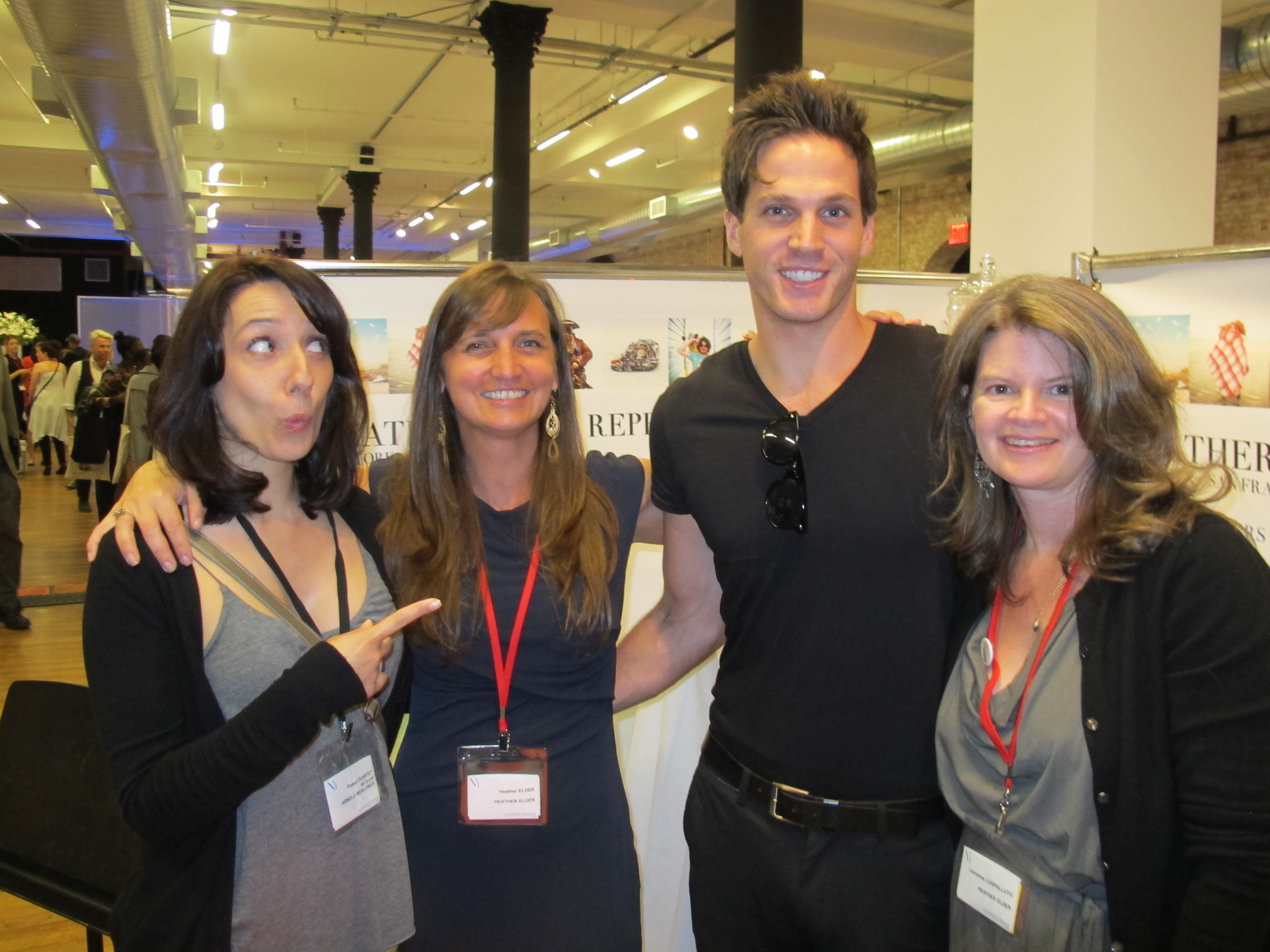
Lastly, I should point out that SO many people helped to make this event a success. Thank you Alex, Patrick and all of your team at Le Book – you were attentive and ON IT!  Thank you to all of our photographers for taking our to do list seriously and providing us with the tools needed to brag about your properly.  Thank you Lauranne for all the coordination, handling of missed deadlines, partnership and of course friendship (and taking a photo of me and Kurt from Glee!!).  And to Henrietta for being there beside us to help put our best NY foot forward.   To Cheryln Quan of Heat for your design help, Nicole Anderson of BookArts for your mastery of book making and Wolf Prints for providing our group portfolio with prints that rivaled all others at the event- I know this because SO MANY PEOPLE said so. And, finally to Taya Curtin http://www.nabookarts.com/ for putting up with all the travel changes and every other detail that we had to think and rethink about.

And of course, finally, to everyone who attended and brought with them an openness to make new connections and see new work.

Until the next time…..

If you like what your read, please do consider sharing and of course subscribing list so you can receive emails whenever we post something new (top right hand corner of the blog).

The Power of the CGI & Photography Partnership as told by Hunter Freeman and Michael Tompert

This slideshow requires JavaScript.

More and more nowadays, photographers are needing to partner with other artists to help create the content that the client requires.  It has led to interesting partnerships for sure.  On a recent project for Covidien with Lehman Millet, photographer Hunter Freeman partnered with digital artist Michael Tompert of Raygun Studio to interpret the art director’s layouts.  A combination of photography, CGI and a lot of creativity helped produce the final ads.

When we asked Hunter and Michael to share with us what was most note worthy about their experience, here is what they had to say:

Hunter Freeman

“This project was designed to have a lot of CGI in it, and the photography needed to do a couple of things.  First, the captures of the talent had to convey/support the concept behind the ad, and two, the images had to be shot so that Michael would be able to easily integrate them into his CGI work, e.g. having matching perspective, lighting, etc..

It’s a fun challenge to get the talent to imagine themselves in a completely imaginary environment, and all of our group did a great job.  I shot them on a simple white background, and, in some cases, had small structures for them to lean on, or work around.  Mostly, though, I got them to really imagine/believe they were in Michael’s fantastical CGI environment.

Having Michael there to place the images into his illustrations – while we were shooting (!) – was a huge help, not to mention a ton of fun.”

Michael Tompert

“Having worked for and with Hunter on various occassions in the past, I didn’t hesitate when the call came to cover the CGI portion of a project he was intending to land.

I have many projects in the portfolio that are completely CGI, meaning I shoot the pictures not with a camera, but with a raytracer, or raygun, I still prefer working on projects that combine real photography with CGI. It’s kind of a best of both worlds scenario.

It also means, there is a photo shoot instead of just emails, iChats and conference calls. And as photo shoots go, they might very well be the last thing left that hasn’t been virtualized, put on the Internet, or made into an app in the digital image creation process. It’s a chance for everyone from the client, art director, photographer, CGI artist to meet for a day, face to face and learn a little about each other. A great opportunity for everyone involved to stick their heads together and riff on what the image can be or could become and try things on the fly.

And best of all, you get to have a great lunch and cream puff cakes for dessert.

It was no different in this case where we started out quite early in the morning, trying out all kinds of things, from different props, to different lighting and angles and could drop screenshots right into the live 3D scene where the model of the CGI art sculpture lived and building the hospital room in front of the art director as the photos came in to see if everything chimes.

In what was really a very long day, Hunter shot I think 3 or 4 talent in any imaginable pose and all kinds of contraptions that made up the hospital room. it was a little past dinner time before the final file was copied over.

It’s interesting how these two worlds, the CGI and HGI (Hunter Generated Images) are so different, where most of Hunter’s time is spent weeks in advance prepping for the shoot with castings, and wardrobe and props, calendars and travel arrangements all culminating in this one day.  While my world just starts on that day and the weeks of rendering, compositing, art direction, beautifying and finalizing are all still ahead when I leave with the drive.

But for that one day of the photoshoot those two worlds are one and the same.”

Which art buyer thinks word of mouth is the number one way to get known?

© Leigh Beisch – http://www.leighbeisch.com

Julia Cunningham, a freelance art buyer in the Chicago area and contributor to our Diary of a Freelance Art Buyer series once again was happy to share with us her insight into our industry.  When we reached out to her to see what she thought of our top five questions she did not hesitate to let us know what she was thinking.  Once again, thank you Julia for taking the time to contribute!

• How do you search for photography nowadays?

Word of mouth is #1. I’ll follow up with Workbook, AtEdge, or PDN to jog my memory and maybe to find someone new.  I also reference ads and editorial work in magazines and find out who shot them.  Archive is always fun to peruse as well.

•  Where do you find inspiration?

Talking with my friends who are in creative fields, I like to hear about what they’re reading, what design styles they’re drawn to, who they’re working with.  I also love to travel – something as simple as observing ads on the streets and subways, the design of a hotel lobby, a restaurant’s décor – they all generate ideas.

•  What are you reading on-line?

Other than reading Heather Elder’s blog? (thanks Julia!!) Usually articles my friends will send me or things they’ll post to Facebook that I feel are relevant to what I do.  Guilty pleasure – OMG and I do have a tendency to be lured in by the Yahoo! headlines, to view the editorial style photography of course.

•  What are photographers doing lately to stand out from their competitors?

Anyone who offers to do comp work is someone I’ll remember – we all know how those jobs can be.  I think it’s a good idea for photographers to meet with one on one with buyers and creatives.  It’s nice to get to know the person along with their work. Offering video is also becoming commonplace.  So many clients want the option, and they want to tie it in with a photo shoot. They need a photographer that can do both or have the resources to make it happen.

•  What does your client value most from a photographer?

The creativity in their approach to producing a job.  Budgets are tight; a photographer’s willingness to go the extra mile with little money is a super star in the client’s eyes.

•  Does that differ from what you value?

It’s doesn’t, I feel the same way.  Quite honestly an engaging personality goes a long way too.

•  And, has that changed over the years?

Sure, competition is fierce and clients expect MUCH more for less.  Technology and social media has obviously changed the way we approach projects too.  I think this is a true statement for everyone behind the lens, in front of the lens, and even those standing at the craft service table.

Thank you Julia!  If you want to learn more about Julia, be sure to link to her site.

How to Best Maximize the Pintrest Potential

Do you know Amanda Cooper?  Well, if you don’t I strongly recommend you get to know her or at least her work.  She is one of the most enthusiastic and dedicated creatives that I know.  When she and I connected at Le Book Connections LA I knew instantly she would be a great contributor to our blog.  Her ideas about the industry were spot on and she obviously had her finger on the pulse of what was going on in our industry. That made her idea to start a conversation about the real Potential of Pintest that much more interesting.

Amanda described her post best when she titled her contribution:  Pintrest Potential; An informative guide to helping to navigate and leverage the creative community capabilities of one of the web’s hottest visual social sharing tools.

Here is what she had to say.

There’s been quite a lot of buzz around the site Pinterest.com lately, and it’s pretty hard not to notice the growing volume of visual updates by photographers, stylists and art directors via Facebook and Twitter which map back to beautiful images hosted on this very site.

Especially with recent statistics (posted April 13, 2012) reporting data:

—As of February 2012, Pinterest had accumulated 10.4 million users. http://bit.ly/KuQzAI

—Over 80% of pins are repins. http://bit.ly/JqLqcg

—Pinterest is retaining & engaging users as much as 2-3x as efficiently as Twitter was at a similar time in history. http://bit.ly/IOEJOO

—Daily Pinterest users have increased by more than 145% since the beginning of 2012. http://on.mash.to/KRh40N

—As of January 2012, American users spent an average of 97.8 minutes on Pinterest. http://bit.ly/IZ1c05

So that’s pretty great for general public stats…

But how does that translate to our industry and specifically as a professional tool for photographers, directors/DPs, stylists, art buyers and/or art directors??

If you’re not already using Pinterest, it’s a great platform both for finding and collecting inspiration as well as organizing and archiving your discoveries for future project resources. Pinterest, in general, works as a great tool for conducting client, product and/or consumer/demographic research as well as for the creative responsibilities of developing mood boards or treatments for bids, putting together comps and assembling storyboards.

Pinterest provides a great opportunity for photographers/DPs to gain more exposure of their work to general public and also to network with other professional creatives and brands.  Many agency art directors, graphic designers and typographers are incredibly enamored with the site and often frequent the site on a near-daily basis to gather research and/or archive their work. Thus, it’s a huge opportunity to network and connect with creatives who may be affiliated with agencies a photographer may want to reach out to—or simply collaborate with an art director or designer on a side project or identity re-design.

The great thing about Pinterest, is that the social sharing is based around visual files. Much like Instagram—it provides the ability to discover others’ galleries and work developments via the connections based on like-minded, relative visual styles. (And since Pinterest provides a profile area at the very top of each user page—it’s incredibly easy to source a particular artist’s website, twitter or facebook page after discovering their Pinterest pins.

I’ve noticed several photographers and brands even beginning to create pinboards that additionally showcase their image libraries, instagram galleries, campaigns and recent projects.

This is a simply yet another free social platform which allows for very quick and easy hosting of one’s work, increasing the opportunity to gain more public exposure.

Obviously, posting on Pinterest as a photographer allows possibilities for the general public, art directors and/or art buyers, brands and potential clients to discover one’s images. Thus, the more clearly the credit attribute information is labeled, (in addition to website URL) ensures a greater chance of proper credit to be established, as well as chance for others to re-direct back to portfolio site as a resource. Having the artists’ name with copywright symbol also helps in discouraging those re-pinning the image(s) from modifying associated credit information and provides greater chance for this information to travel around the Pinterest site (and distributed web) with proper credit attributes.

Here is a great format that I personally use when pinning images from professional photographers which helps provide a pretty visible, clear copyright association:

When other pinners notice this image on my board—they are more hesitant to manipulate the image if they see the photographer’s credited name and the “©” copyright symbol.

Additionally, there are a few other ways in which professional photographers can prepare their galleries on portfolio sites to help encourage Pinterest integration with their work:

-Adding instant share (Pinterest) social icon button to website images:

-Although many photographers are less concerned with using watermarks these days as it discourages the “social share” factor—even if you decide not to incorporate them into images, it’s best to add any relative copyright adjacent to image(s) or ensure to have a page on website clearly showing general copyright information whenever possible.

Embedding metadata into image files and in image file naming system (ie. when saving/exporting out of Lightroom, Photoshop, ensure to embed all associated URLs, copyright info and meta data) so that if someone does pull an image which may have missing info—there is a chance of still maintaining related information. (This is especially key for videographers and DPs out there, as Pinterest is now allowing users to pin videos—if a pinner pulls a video from Vimeo or YouTube—Vimeo currently features the Pinterest-share icon associated with videos, however, YouTube currently does not offer this direct capability at the time of this post.)

Do note, most flash galleries do not allow for compatibility with the Pinterest browser toolbar app.

See image below for what occurs when one attempts to use the Pinterest toolbar app. to pin an image featured in a flash gallery:

(In some cases, I have seen images on Pinterest by photographers who I know host flash-based galleries.) My guess it that these images were then either screen-shots or they were pulled from images hosted externally from portfolio(s) elsewhere on the distributed web.

For general public pinners, if you can additionally try to ensure the following information is visible whenever you add new content, or simply help to correct/update the information (if you notice it’s missing credits) when re-pinning any images/videos—that is always ideal…And somewhere the original artist will be thanking you for taking the time to help preserve the integrity of their work as they generously allow our greater community to enjoy it!

Amanda N. Cooper is a freelance Art Director, Designer living/working between S.F. & L.A. and is deeply passionate about photography and surfing. She has been an active member of the Pinterest community since April of 2011 and her first re-pin on the site was of a beautiful, rusted-out vintage VW bus parked at a surf break. You can see more of Amanda’s work, link to Pinterest collection and learn more about her at: graphicsdiva.com/


5 Popular Legal Errors in the Photo World

Leslie Burns, of Burns Auto Parts fame has recently joined forces with Carolyn Wright of PhotoAttorney.com to further educate the photo community on legal issues.  Once Leslie was officially onboard,  timing was right to ask her if she would consider contributing to our blog.  She did not hesitate and offered to share with us what she thinks are the 5 most popular legal errors in the photo world.  If you have other questions not addressed  here, please email me and we will see if we can get them answered.

5 Popular Legal Errors in the Photo World

There is a lot of mixed legal information out there now. Unfortunately, much of the info available, particularly on sites like Wikipedia, is legally inaccurate and can hurt you if you rely on it. So, in the spirit of trying to help, here is a list of five common legal misconceptions in the photo world.

1. If you make a photo, you have to register its copyright within three months or it’s not worth bothering.

This is a common misunderstanding of the 3-month rule. That rule is really a safe harbor for published photos. It says that if you shoot a photo and publish it, you have 3 calendar months from that first publication date to register the image’s copyright and it will be like you registered it the day it was published. If someone infringes on your work during that time, you can still get the enhanced remedies of statutory damages and attorneys’ fees, even if you register it after the infringement starts (as long as you register within those 3 months).

The general rule is that you have to register the work before an infringement to get enhanced remedies, but the 3-month rule gives you a window. However, lots of infringers will say you can’t get statutory damages and attorneys’ fees if you don’t register within three months, period. That isn’t true. As long as you register before the infringement starts, you can get enhanced remedies–even years after you make the photo. And you have to register your work to bring suit anyway. So please, register all your work, as soon as possible!

2. You must pay your models real money or the release is invalid.

“Consideration” is a nebulous concept in contract law but the fundamental thing is that it doesn’t have to be of the same value on both sides. So, although you need consideration and it should be mentioned on your model releases that there has been an exchange of consideration (“given and received”), that consideration can be a dollar or a print or just about anything.

Relatedly, always get a release signed if you possibly can, even if you don’t think you need one. Better to have one and not need it than the reverse. It;s damn cheap “insurance.” The release apps are fine, but take photos of IDs to prove age and identity just to cover your butt.

3. If your work appears on a site with a DMCA Takedown Notice procedure and the site takes down your work, you cannot sue anyone for the infringement.

DMCA takedowns only protect the third-party hosts of blogs, user-generated content sites, etc. So, for example, if you make a video and someone posts it to YouTube (without your permission or a license) and YouTube takes it down when you ask, you cannot sue YouTube; however, you can sue the person who put your work up there in the first place!

4. There is no need for a copyright notice on your work.

Although there is no requirement that you post a copyright notice with your work in order for the full protections of copyright to apply, if you do post one it can make a big difference in any infringement case. If there is a notice and your work gets infringed, that eliminates the possibility of “innocent infringement” by the infringer. Also, if the infringer removes your notice, you may have a claim under the DMCA for Copyright Management Information removal (the DMCA is not just about takedowns).

Oh, and if you use a copyright notice, make sure it’s in the correct form of “© + date of first publication (not creation!) + your name” so, for this post which is my copyrighted work (published by Heather with my permission), the correct notice would be “© 2012 Leslie Burns.”

5. If someone uses a photo on a personal blog or editorially, or if someone only uses a small part of a work, that use is Fair Use.

Fair Use is a much, much more complicated thing than most people think. Courts must look at all four factors in each case and those factors are not what they sound like to the lay person on top of it all: Purpose of the use; Nature of the use; Amount and substantiality of the work used; and, Impact on the potential marketability of the work. So, for example, while a non-commercial use is a plus in the Fair Use column, it is not close to conclusive. There are cases where a whole work being used was Fair Use, and others where a very small part of a work was not Fair Use. There simply are no hard and fast rules. You should definitely ask a lawyer before assuming something is or is not Fair Use.

By the way, this post is offered for educational and informational purposes only and should not be taken for legal advice. Yes, I have to say that.

______________

Leslie Burns has been involved in commercial photography and the creative industries since the mid-1990s. After working on both sides of the business (buying and selling), she became a rep and later a marketing consultant to commercial photographers. Her oddly-named Burns Auto Parts has worked with photographers from San Diego to Boston, Denmark to South Africa, and even Australia. With three books under her belt, she got to fulfill her life-long dream when she earned an academic scholarship to attend law school. There she studied IP and small business law in order to help photographers and other creative professionals even more. She passed the CA Bar exam on her first try in 2011 and now both consults under the Burns Auto Parts brand and offers legal services as a part of the Law Offices of Carolyn E. Wright, aka photoattorney.com.

I am glad that I market to advertising people.

In March of 2011, I hosted a group meeting for our photographers to get them to start thinking about how they were going to participate in the new media market that had emerged.  I challenged them with the question, “Have you picked out your new glasses yet?”   The conversation encouraged the photographers in our group to reframe how they think about their business, decipher what is valuable to a client now and figure out how they can best participate as things evolve yet again.

It was no surprise that one of the biggest part of the conversation revolved around social media.  It was an area that some in the group at the time were resisting and others just did not yet understand what role it played.  Many wondered if it worked at all and others were worried that their “true voice” would get lost in marketing message.

A few months later, I co-hosted an event with the APA in San Francisco and realized that my group was not alone.  There were so many photographers out there wondering how to use social media in their business and if their target market really paid attention to it.  What we discussed resulted in one of our most highly viewed posts, 20 Important Things to Know About Social Media and the Photography Industry.

Fast forward a year from our meeting and all of our photographers have embraced social media.   They have found their own way to utilize it as a marketing tool that works for them and all would report back that it has made a difference in their recognition and connection to both current and potential clients.

So, when an advertising agency in San Francisco, Heat,   published the results of their social media study on how advertising professionals used social media, I thought it was a good time to revisit the conversation.  While Heat used it as a cautionary tale on having the right perspective when using social media when targeting a mass audience, I saw it as proof that the people in our industry do use social media, and much more than most. (Of course, it is still up to you to use it effectively in order to see results.)

Even though The Huffington Post’s spin is that Advertisers are More Socially Obsessed than the Rest of Us, I think Will Burns, President of Ideasicle and contributor to  Forbes.com says it best, “Advertising People are the New Medium.”  Be sure to read the article in full, the success story examples he shares are worth the read alone.

So, if you are still doubting the power of social media in our industry, it is ok.  As Hunter Freeman said, “it is ok if you are not out there.  That just means there is more room for the rest of us!”

If you have questions, or want to keep this conversation going, please email me or comment.  Sharing the posts are always a good idea too – you know, the power of social media!

© Heat Advertising – http://www.sfheat.com

On the Radio with Community Table


Community Table NYC is just around the corner so what better time to provide a glimpse into what made Community Table LA so successful?  Thank you to Anderson Smith and Jillian Hayes of One Hour Photo for inviting Kate Chase of Brite Productions, Lisa Matthews of Team One and Jigisha Bouverat of TBWA\Chiat Day on air with you to discuss more about the past and future events.

If you care to listen in on what was discussed, the podcast of the show is up and running.  Here are some of the things we discussed.

•  History of Community Table and how is came about

•  Why the art producers found it valuable

•  How the community at large used the information they learned

•  Some of the questions discussed at the LA event

•  Some ideas for new questions for the NYC event.

If you are interested in reading more about the Community Table LA event, please link here for the posts.

As well, please consider submitting a question for consideration for the NYC Community Table event coming up this June, at QUESTIONS@COMMUNITYTABLE.INFO.

And, if you want to hear more from the crew at One Hour Photo you can link to their blog here.

Art Buyer Insider: Cindy Hicks of The Martin Agency lets us peek into the world beyond her office door.

Cindy Hicks

As I suspected with our first Art Buyer Insider post with Ilona Siller of Draft FCB/NY, an interview series that celebrates the art buyer for who they are rather than how to get their attention is powerful.   As I mentioned in our debut post, art buying is such an interesting job to say the least. The people I know in this position come from such rich and diverse backgrounds and rarely do they follow the same path to become one.   Cindy Hicks shines when she lets us peek into the world beyond her office door.  Knowing what we know now, it is no wonder she is so dynamic, creative and thoughtful.

For those of you who do not know Cindy, she is not only a Senior Art Buyer  at The Martin Agency, she is also a photographer.  Be sure to follow her photography blog, you will enjoy the images that show up in your inbox unexpectedly.  She is truly talented.

Here is what Cindy shared with us.

What did you “want to be when you grew up?”  Are you surprised where you ended up?

Not in the least. Everything that I always wanted to do had something to do with photography. It might not have ended up exactly here, but I get to work with people I could only study in school and my job keeps me inspired. The first time I called Eugene Richards, he picked up the phone and I was amazed. I hired him and he was great. I went on a job with a photographer shooting with a 4×5 and I hadn’t shot with mine in a while, so pulled it out. It gives me a living and benefits and fabulous things like that and feeds my creativity.

I knew I’d do something with photography since I was a little kid. I never understood how people could go through their lives not knowing what they wanted to be. It’s why I like to talk with and teach kids and help them creatively. I had dyslexia and didn’t do well in school. And to give them the idea that you can succeed without being a doctor. There are a lot of ways to get there.

What was your path to becoming an Art Buyer?

I had worked in studio management, as a prop stylist and as newspaper photographer & ran a dip & dunk E6 Custom darkroom.  Suzanne Sease at The Martin Agency called me and asked if I wanted to be an art buyer. It was Christmas of ’96. I rummaged around and threw on a skirt and came in for the interview. I was freelance at the time and I recommended three people for the job other than myself. One month later, they called and said they really wanted to talk with me. It was the winter lull, so I thought maybe it would be a good time to go full-time.

It turned out that it used all the skills from jobs I’d had: studio management, prop stylist, location scout. I was also a natural problem solver and saw like a photographer. I have lived in Virginia my whole life and am very lucky Martin is here. Good to leave to go to LA, Chicago and NY but nice to come home. I also like traveling to San Francisco because of the food and you can shoot anywhere.

Though I’d been doing it forever and didn’t know it had that name. I wish there were more options taught to photography students. I’ve always been a photographer but glad I don’t work as one. Someone coming in and saying they really love my work and then want me to do something different. This way I keep my work for myself and not valued by someone else financially—keeps it personal. It’s all mine.

With my photography, there’s a lot of stuff I do and stuff I do well. I’m confident about my photography. It doesn’t matter what anyone else thinks about it. There are things that matter. You cook something or pick a restaurant or your parenting skills. But the photography I kept for myself, not up for critique. I think if I worked at it as a professional it would be up for critique every day.

I see the art directors flip through their books everyday. When art producers are building relationships with reps, I give suggestions about editing their photographer’s books. I would say it to a photographer but not in a group setting.

What was that first moment of inspiration when you knew you would work in a creative position?

I can still tell you what was on the first roll of film I developed. It was a 126 plastic film cartridge. The kind you would break open in the dark and develop in a tray. When I flipped on the lights and saw it develop in the tray I had an ‘aha’ moment that I’d created something and then had to use science and chemistry. Plus I believe in making a product of some sort.

I came up being a studio manager, darkroom, newspaper photographer, studio manager and did an internship at a progressive high school – two weeks of volunteer work after Christmas break. I hung out at Richmond newspapers for all four years. I had a picture published on my second day and knew this was what I wanted to do.

© Cindy Hicks

Growing up, what were your creative interests?

Just photography, but my sister’s an organic farmer and we’re big on working hard and creating and making things. I say if advertising makes me insane, I’m going to go become a farmer with my sister. It’s crazy hard work, but I like the idea that growing something is creative as well. I feel the same way about flowers, vegetables and plants.

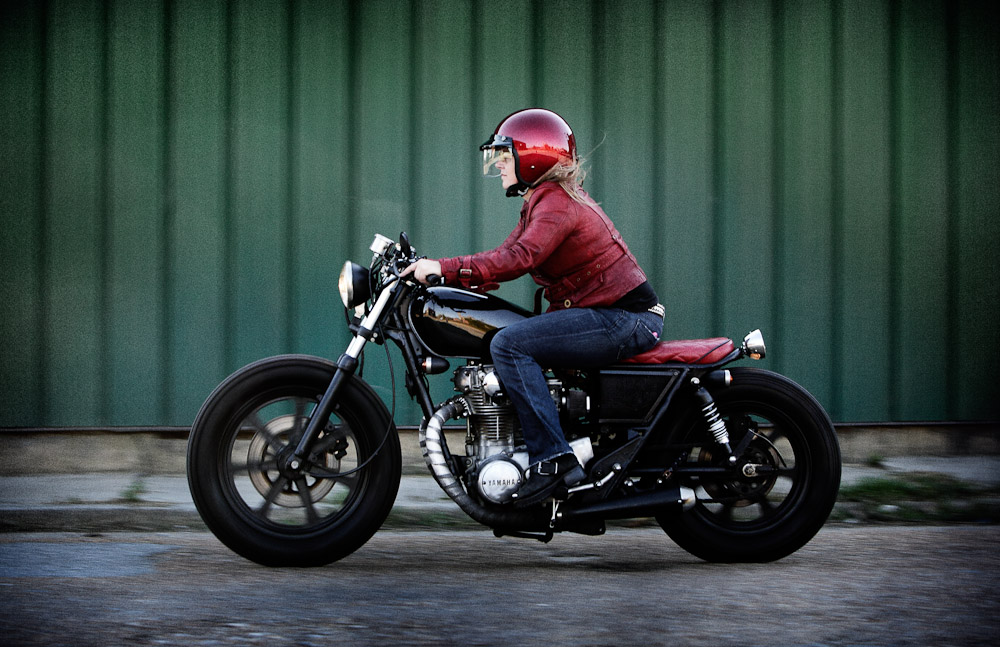
You recently were in a motorcycle accident.  How has that experience influenced the way you live your life?  See your job?  Approach projects?

What was interesting about that was that it happened on a Saturday night and I went from having a meeting on Friday afternoon to three months being totally removed from work. I had to stop everything. It made me more patient. We’re always planning for that next thing and working two three months out. It allowed me to be more present and helped me be a better parent. Things just happen. It was an accident and I’m lucky to be alive, especially for my daughter.

When I came back to work, everyone asked ‘where’s your edge?’ I said that I’d left it on the side of the road. It taught me that stuff happens and we can be patient and pause for a moment. Patience and living in the moment which is something I never knew how to do.

Do you see your creative self in your daughter?  How does it differ from your creative self?

My daughter loves loves dance and any kind of art. She is amazing, but everything she does is through movement. I love to take photos of her and she’s eight and finally allows me to do it. She helps me see things and has helped me slow down a little bit. They grow up so fast and I don’t want to miss any of this. I want to be present for it. Being a creative person – when we paint, we go get big canvases. She’s never going to be at a loss for art supplies.

I was cutting the grass one day and she asked to try it and I said sure. She was pushing around in patterns and no straight lines and it looked like a Pollock painting. We laughed and took photos of it and then went up on the roof to see the design in the grass. She thought it was awesome. That kind of stuff is how to live in right now.

© Cindy Hicks

How has your experience as a photographer informed your art buying?

I just have a different eye and know what goes into things. When we used to shoot film, I remember a cost consultant ask why we needed so much film. You can help photographers. When they send an estimate wanting to get the job I can see if they have enough assistants and money listed for pre-production.

Every art producer can learn that, but when you’ve done that it’s easier. It’s also very helpful when you are explaining to cost consultants why you need before and after days for a shoot on a set that has to be built and disassembled.

It makes me more of a photo snob for sure. There are a lot of photographers out there who maybe got into it because they love the equipment and working as a career. But not all of them have an eye for what they are doing. There’s an inherent way of looking at things when you have an artistic eye. It can be for anything, typography, illustration, photographer. There’s something extra. An appreciation for the craft. Seeing how light falls across something. If they know if morning or afternoon light hits their house. Visual thinker vs. non-visual thinkers.

I’m also more astute when evaluating trends. I see where things are going. Where they’ve been. When they’re circling back around. Trends are really hard. Things move so quickly not even sure there’s time for things to trend. I’m interested in it being based on craft and quality. Remember when snapshotty  style was in? It’s going away. Then things were de-saturated. That’s gone away. HDR – hopefully that’s gone away.

What one word describes your style as an art buyer?

Unexpected. Years ago we had Saab. They wanted somebody who had a Big Daddy Roth style and I was out at a band and saw a guy who had that style tattoo. I found the guy who did his tattoo and brought him in to do the illustration for us ;Bob Gorman; a member of the band GWAR. I found it on somebody’s arm at a club one night instead of a traditional sourcebook. Art is everywhere and artists are everywhere. I once hired a woman who was a gate guard at my pool. Just keeping your eyes open.

How do you describe your job to your mother or someone not in our industry?

I once saw the film Wag the Dog with Dustin Hoffman. It describes how one creates a diversion so no one sees what’s really going on. We make all that stuff happen and if we’re really good, it all goes off without a hitch. And when bad stuff happens, you fix it.

© Cindy Hicks

Where do you, as an Art Buyer, look for inspiration? Stay inspired?

Everywhere. Blogs, yes. Sourcebooks are a tad bit dated because by the time they go into production, it’s a year and a half old work. I really like blog sites and subscribe to so many of them. And, believe it or not, mailers. I look at every piece of mail I get.

I have a tendency to stack things. So I stack them and remember where they are. But I’ve started using Pinterest (http://pinterest.com/chicksva/) for my visual interests. If I’m into a certain style, I make a board. But now the legal stuff is getting tricky. I deleted my photographer page for fear that someone would not see it how I saw it. I always sourced and linked, but pulled it down.

What do you think is important to do in your personal time to keep you inspired at work?

To get away from work. To truly do something not work related. I love to work in my yard. To see a lot of music. I try to get away from advertising. Live outside of that crazy world. Advertising is not a real world. And so it’s nice to sort of detach a little bit.

What do you love about your job? What about the industry/your job is exciting right now?

I love that it’s different every single day. I like what’s happening at Martin Agency and it does feel like we’re coming back to more creative and design inspired ways. And that makes me happy.

It is also gives me great stories. I was working on a Walmart job. They wanted to use photos from a woman on Flickr who did nothing but dress up her dachsunds in clothing. I had to reach out to this woman who did this because Walmart wanted to use her images for their Christmas advertising. She posted “I’ve stopped photography because photography killed my dog” on her Flickr page. She told me a terrible story of something that happened to one of her dogs. Told her would pay her more money and she said it would honor her dog.

I come from a family where we sit around the dinner table, drink wine and tell lots of stories. Martin Agency has given me lots of stories. You never do same thing twice and can’t imagine not working some place where over-the-top hilarity ensues.

Flickr is huge. Asking for usage, people would just want a new HD card. But I pay them more of course. If there’s some kid out there who shot a photo we really want to use, I can give them $1,000 and they can buy a new camera and put them on a road they wouldn’t necessarily go down.

© Cindy Hicks

Do you have a personal aesthetic that comes through in the photographers whose work you are drawn to?

I’m sure I do because I don’t like humor unless they are European because they are higher brow. I have a tendency to like things that are lush and well lit. I like the paper that it’s printed on. It’s the whole package. It’s visual. Something that evokes some sort of feeling. If it’s really good food photography, I don’t care if you just ate you’re hungry. I get teared up when they are so gorgeous and not sure exactly why, but something about work that speaks. But it’s all about craft and about someone who has really spent some time looking at things.

If you could change one thing in the creative industry right now, what would that be?

I would put the value back in to certain creative. It’s not about money, but it is about value. You can have it good, fast or cheap, but you can only have two. And people are leaving ‘good’ out of it and want it fast and cheap. I would like everyone to slow it down just a little bit to bring back the quality. To have the appreciation for things that are of quality. To just want the job done well and with passion. Nothing is free, the fact that seems to be lost lately.

If you could tell photographers one thing, what would it be?

Show me your passion and why you do this and what you love. Don’t show me what you think I’ll like. I’d much rather see their personal work because it wasn’t done for someone else. It’s hard to look at someone’s work sometimes because you don’t know if it’s art director or client driven. But something they shot for themselves tells me more than anything.

What do you think is the key to keeping it relevant?

Adaptability. Always learning something. This is the way to stay fresh. Do I miss the days of big photo shoots and budget? Yes, of course. Do I think they are coming back? Maybe. There will be a shift back to craft at some point. YouTube made us think everything can be 72 dpi. We have a new creative chief: John Norman he has nurtured a very designer  based/ creative environment  They truly believe in craft, in making things. We’re pulling our own silkscreens. A trip back to organic, a comfortable place for me.

My grandfather was a forest ranger and the first person to teach me about natural farming. We would go fishing and clean the fish and bury them in the garden for fertilizer. Now there’s a return to people wanting to have this hands-on approach and I hope it sticks in all aspects of life.

I love the return to really good typography and good art and there will always be 12-year-old-boy humor in advertising.  There’s a place for people who think everything is new. There are also the older creatives who say we’ve done that. And I straddle the two and say “How come we can’t reinvent it and bring it up to date.” I have a fine art background so more akin to the creatives than the art buying side.

What is challenging right now?

I don’t want to say the death of print, but it has changed. Still photography has changed. It’s turned into “Can’t we use screen grabs from the TV spot?” I’m constantly trying to educate about this. Everyone has confused HD for film with HD for everything in the world. It’s not the same. Photographers craft an image for that moment. With a screen grab you’re just grabbing a little moment and hope it translates. I feel like I’m constantly fighting the good fight. On the Red site, it tells you the screen grabs are not hi res enough for a full page print ad, I am still learning .

I have to show it to them. Look, this is the equivalent. I used to be able to talk in film equivalent —35 mm vs. 8 x 10. Now nobody understands this, but I show them how pixilated and flat it is. And sometimes the client says it’s fine. If mediocre is ok, that’s a much bigger problem I can’t fix. Producers are fixers. One thing I’ve learned I can’t fix everything. But I want to get as close to it as I can. You can go nuts like that, but it’s what’s kept me in this business for 15 years.

The next time is going to be perfect. I am afraid that if I ever have the perfect job, I’ll get hit by a bus (but not so funny any more). I always want to do it better next time. I love the quote by Imogen Cunningman, “Which of my photographs is my favorite? The one I am going to take tomorrow.”

This is the opposite of trying to control everything. I’m an optimistic producer. I know all the bad things that can happen, but I look at things like everything is possible.

I’m very DIY. We can figure it out and make it work. My mom & dad are very much like this. I have a very supportive, competitive family and was taught everything is possible. You just have to go out and try it. Because I’m a born photographer, I would shoot anything and it led to other things a BFA, newspaper work, commercial studio, prop maker/stylist/ locations all led to where I am now, who knows where it leads next.

Favorite way to spend a Sunday?

Working in the garden and being with my daughter. Used to be motorcycle riding, but not so much of that anymore.

© Adam Ewing

Replaced motorcycle riding with anything?

I decided to have a show this year. I’ve always wanted to have a show and have one planned for fall. We have First Fridays and John Mills of Release the Hounds who does work for the agency has great space on art walk so we decided to have a show at his space.

Latest discovery? (website, blog, store, flea market…). Latest Pinterest board?

Even though I collect arts and crafts furniture from the turn of the century, I’m a huge fan of architecture and love the idea of inside and outside spaces coming together. So I’ve started  admiring mid-century modern furniture (mostly posting on pinterest) and believe it or not, there is a lot of mid-century modern architecture and there are a few of dealers here in Virginia, I tend to look for pieces for other people, like a furniture love connection!  I try to watch Mad Men for propping and styling but it’s too stressful to watch advertising at night.

I also love cooking and like to bake, to make things for other people to eat.

On your home office walls?

I tend to have a lot of illustration and not a lot of photography. I have framed photography that sits on the floor thinking about being hung. On the walls, I have wood-block prints and illustrations from early 1900’s mostly Sir William Nicholson and modern silkscreens. If I got to frame something, I’m never sure I’m crazy about it after I’ve framed it.

Do you have a favorite photo of yourself that you are willing to share?  Can you tell us about it.

Most are ones I’ve shot myself. Then you can delete stuff that you hate. With the iPhone you can put so many apps on it you don’t look like yourself any more. It’s awesome.

And, a special thank you to Alison McCreery of POP Blog for her outstanding interview skills!

See why Kevin Twomey connects his shoot with a pelican to The Chaos Theory. Check out the images and video and see if you agree.

© Kevin Twomey

After the success of Julianna Baggot’s book PUR, Grand Central Publishing released the second book in the series, Fuse.  And, once again,  Kevin Twomey had the honor of photographing the cover.  And this time, it didn’t feature butterflies.  It featured a pelican.  When we asked Kevin to share some of his experience with us, here is what he wrote.

“There are times when I become so wrapped up in the technical challenges of an assignment that not until its end do I realize how inspiring it was.  The photographing of a pelican’s wing for the cover of Fuse, the second book in Julianna Baggott’s post-apocalyptic trilogy, was just such an assignment.

From the photograph, you can see the impressive 8-foot wingspan of Neptune, the year-old pelican we had the pleasure of showcasing for this assignment.  The relationship with his trainer, Joe Krathwohl, was heartwarming; the pelican toddled behind Joe everyplace he went, even waiting outside the bathroom door for him.  Joe’s knowledge and passion for his work soon prompted us to bestow upon him the title of “bird whisperer”.

But what really inspired me was the turbulence generated by the powerful flap of his wings.  It brought to mind the chaos theory quote about how a bird (or butterfly) flapping its wings can affect the future course of weather halfway around the world.  It generates the indescribable feeling of being at the source of something simple yet incredibly powerful, and not yet knowing in which direction it will go.

And how privileged I felt to be able to capture that moment, from our chaotic environment of passion and expertise and inter-species relationships, when the bird flapped his wings.”

Solving Mysteries with Ken Zane of Digitas Health

© Chris Crisman

For those of you who do not know Ken Zane, you need to meet him.  If you do, you will become instant friends.  He is not only great at what he does, but he is fun to be around.  Digitas Health in Philadelphia is lucky to have him as their Senior Art Producer.  There is never a dull moment with Ken and when you are with him, you feel like you have known him for years.  When we asked him to contribute to our Solving Mysteries series, he did not hesitate.  No surprise there.

How do you search for photography nowadays?

I like to look though magazines, search online at sites such as the WorkBook and LeBook.  I also speak with other art buyers.

Where do you find inspiration?

I find inspiration almost everywhere, museums, friends, Photographers, Art, sometimes just walking down the street you will suddenly notice something that moves you.  Mostly, I get inspiration from people who are condifent and driven by their own personal vision.

What are you reading online?

I am reading Art Space, Nowness, Saatchi online, Fashionartisan; among various other sites for inspiration.

What are photographers doing lately to stand out from their competitors?  

I think a photographer’s personal vision is what makes him/her stand out.

What does your client value most from a photographer?  Does that differ from what you value?  And, has that changed  over the years?

I think we all value team work, honesty and integrity.   I also always appreciate someone who is passionate about what they do and who will go the extra mile.