Welcome Back to the Community Table: Agents in Conversation with San Francisco Art Producers. The Appetizer Part I

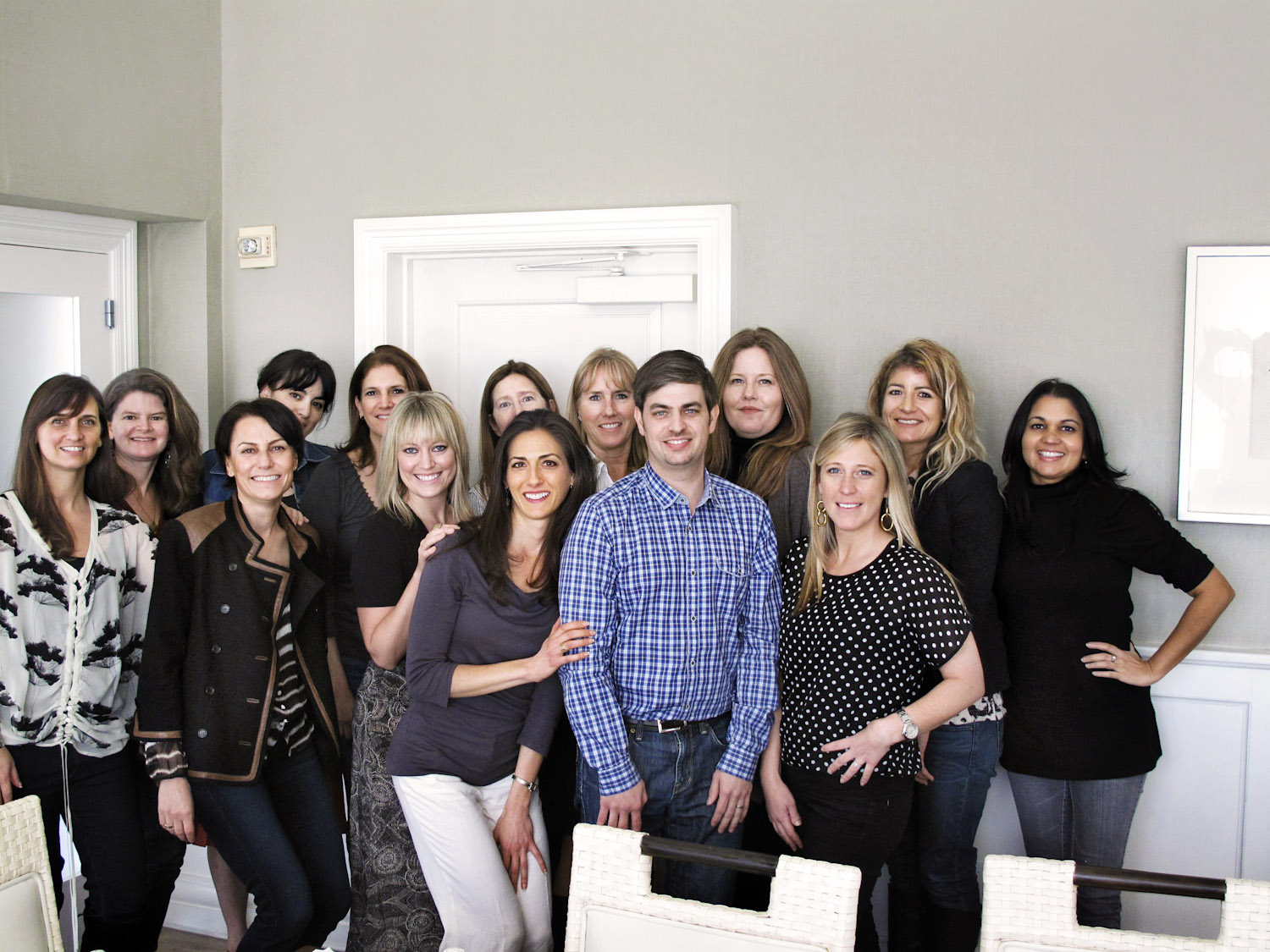
ChaseElderIMG_9059_w1Welcome to our 3rd series of posts where we share the results from our conversations held directly with community leaders about top of mind photo-industry issues.  Community Table was formed from the collective efforts of Matt Nycz andKate Chase of Brite Productions and Heather Elder and Lauranne Lospalluto of Heather Elder Represents with the idea that there is nothing more powerful in our industry than education.

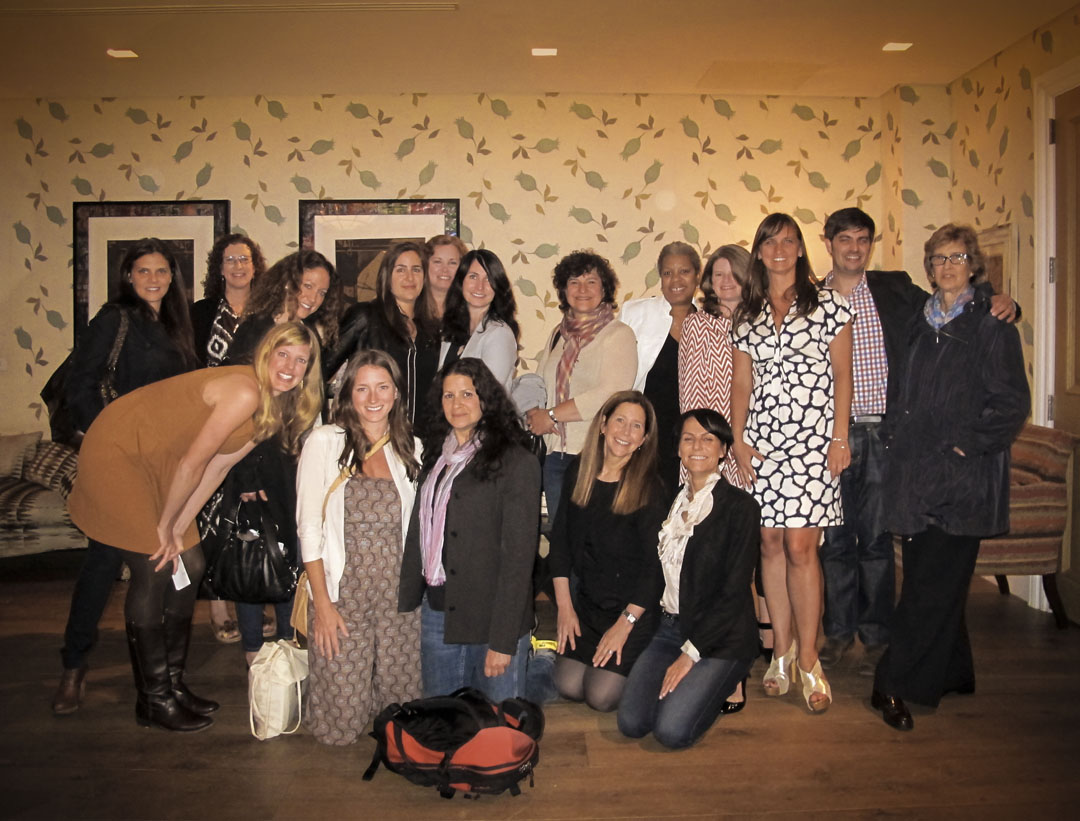
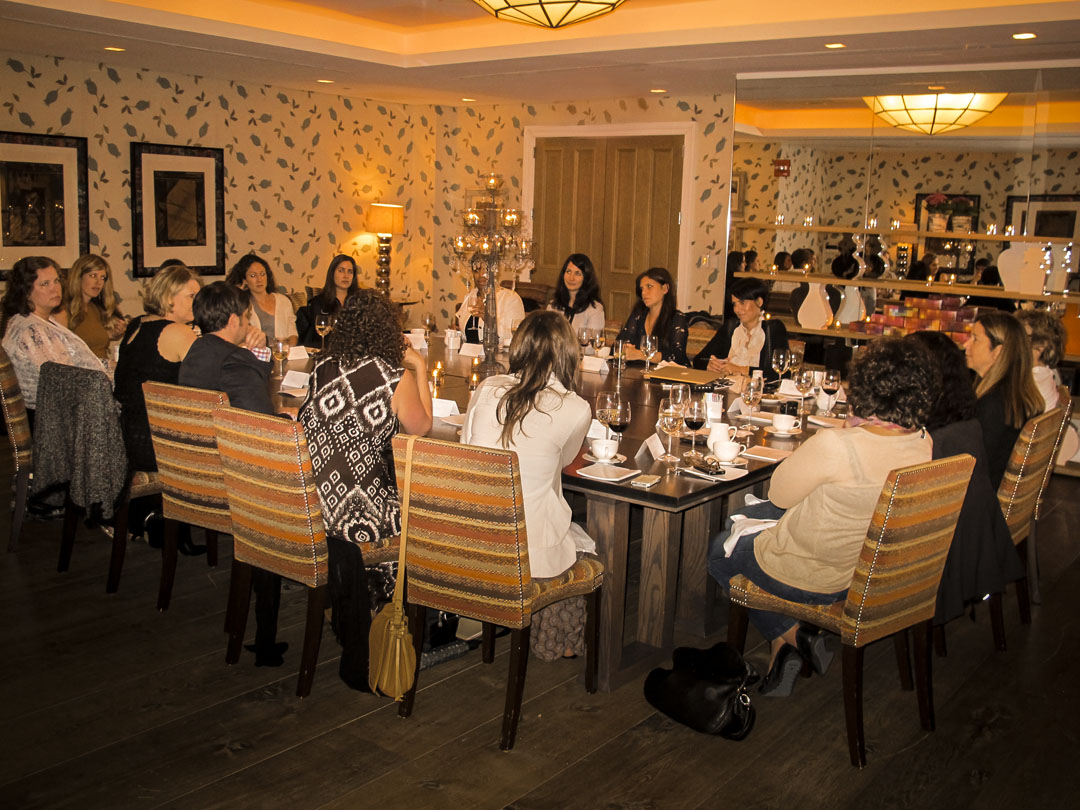
And we held this event in San Francisco, hometown turf for not only advertising luminaries with names such as RineyGoodby and Silverstein but also Elder,Lospalluto and Chase.  So for this one, the Art Producers who joined us were long-time friends and neighbors that have been instrumental in keeping SF on the advertising map, who have played a key role in the creation of stand-out imagery for such national clients as Foster Farms Chicken, Sprint, GM, Comcast, The North Face, EA Games, Mini Cooper and Priceline.  So we invited them to start the year with us, add their hard-earned insights and voices on estimating to our series, and over a lunch in early January and a breakfast in January they were more than happy to do so.

 As a reminder, each Conversation Starter was directed to one person with a general discussion ensuing.  Not surprisingly, many of the answers were similar to those of our LA and NY colleagues.   Therefore, rather than sharing the entire conversation, we included the original question and then the quotes and notes that were most relevant.  Please note, often times the person leading the conversation spoke most often.

And with that, we welcome you back to the table.

Please note, there will be eight posts shared over the month of April.  Tune in every Tuesday and Thursday for the latest installments.  

San Francisco Participating Art Producers

Owen Bly:                               Art Producer/Freelance

Kate Stone Foss:                     Art Producer/Freelance

Cameron Barnum:                   Art Producer/BBDO

Shayla Love:                            Art Producer/Razorfish

Suzee Barrabee:                       Art Producer/Goodby Silverstein & Partners

Dan Southwick:                       Art Producer/ Goodby Silverstein & Partners

Kristin Van Praag:                   Art Producer/Heat

Jacqueline Fodor:                    Art Producer/Venables, Bell & Partners  

Rebecca Lanthorne:                 Art Producer/Butler, Shine, Stern & Partners

Analisa Payne:                          Art Producer/Freelance

Justine Barnes:                        Art Producer/Duncan Channon

Marissa Serritella:                   Art Producer/Butler, Shine, Stern & Partners   

COMMUNITY TABLE – THE APPETIZER: PART 1

Conversation Starter 1: Sharing Information

Conversation Starter 2: Terms & Conditions

Conversation Starter 3:  Removing usage After the Shoot

CONVERSATION STARTER #1

The Bid Process: Sharing the initial information

How do you present information to a photographer for a bid? 
Is it a formalized process at your agency or do you just send an email with whatever information is available.

Analisa Payne/Freelance Art Producer

“It varies. I’ve been fortunate enough to set it up as I see fit. I prefer to have a spec sheet. I highlight points in an email, but think it’s important to have everything in a form that has very specific information about the job that I know or to date and any visual reference that would go along with it. I try to think of any question that might come up along the way. And if I don’t have an answer for it, I note that.

I have a pet peeve about email when you get into a chain situation and points that need to be addressed are spread across multiple emails or communications. And I think things get overlooked often in those circumstances. So I like to have everything in one place even if I have to update and revise it from time to time throughout the process. I try to keep as much as possible from slipping through the cracks because a quick email to say something important may not get read or missed and then after the fact you’re trying to clean up a sticky situation.”

Suzee Barabee/Goodby Silverstein & Partners

“We have a lot of different ways. We start with a Statement of Work when bidding the job and then it’s formalized in the contract once the job is awarded. For Chevrolet, we had a specific estimate document we used for bidding.”

Kristin Van Praag/Heat

“We don’t use a formal document because we do not art buy as much as some other agencies, so formalized forms were not created. We send an email with the comp.  We do however have formalized purchase orders. It is just a little more flexible with us. I haven’t run into problems yet. But if I did, I would formalize it.

Marissa Serritella/Butler, Shine, Stern & Partners

I’ve done it both ways. It’s more flexible here than where I was previously (and busier) so often it’s an email with all the info we have to share at the time. It’s important to share everything you know about it, but sometimes an organized email does the job just as well as a form. Is there something you prefer?

Lauranne Lospalluto/Heather Elder Represents

“Having a spec sheet to work from is very helpful so we see everything that is required and don’t follow up with small detail questions that probably annoy you.”

Kate Stone Foss/Freelance Art Producer

“I think it’s important when presenting to the client to have it all on one document that is very clear so everyone knows what they are getting. When they are looking at the estimate as well so we are all on the same page. It’s an evolution as well – things change and are cut.”

Kristin Van Praag/ Heat

“The spec sheet or initial email serves as a completion report at the end.”

Kate Stone Foss/Freelance Art Producer

“I cc as few people and include as much information as possible on the spec sheet to avoid tagging important questions onto the very bottom of a long email.”

Owen Bly/Freelance Art Producer

“Each shoot is its’ own beast. I call first to warn about what’s coming and then clarify with an email. With reps you know, it’s fun to call and chit chat.

At Goodby we wrote an email with bullets and went over any questions on the call. I liked being able to customize it—each email was tailored to the needs of the specific shoot so a form wasn’t necessary.”

Lauranne Lospalluto/Heather Elder Represents

“Some art buyers like talking with us and others are hands off. There are plenty who don’t call.”

Jacqueline Fodor/Venables

“I wish I had a form. I have worked with art buyers who are very organized and have everything documented and checklists. I’m always envious, but that is not me.

Many times I have to triple bid, so I send the same email to all the agents and if there’s a favorite I let them know. After I send the email, I pick up the phone and call right away.

The email includes the comp, potential shot list, usage, and any other details. This is just a framework. The other party won’t know the complete scope of work until the creative have a conversation with the photographer.”

Heather Elder/Heather Elder Represents

“Do any of you ever send the same request to more than one photographer at the same time?”

Jacqueline Fodor/Venables

“Yes, especially if it’s a triple bid, but it’s a separate email to each rep. I’m transparent and again, will tell the rep if their photographer is a favorite.

It’s rare, but sometimes we’ll want to work with all three. But the creative generally know who know who they want to work with. But I need to be prepared to present all three.”

Heather Elder/Heather Elder Represents

“How often does the second or third choice rise to the top after the call?”

Jacqueline Fodor/Venables

“It’s rare, but it happens. You may think you know who you want, but until the phone call and there is a love connection between the photographer and art buyer nothing is final.

I work on the relationship with the rep. But if there’s a new photographer then it comes down to the relationship between the photographer and the creative. And there is a chance they might want to work with them. You never know, so I try to be prepared. A wild card can always be thrown in there.”

Kate Chase/Brite Productions

“Have you ever worked with a form?”

Own Bly/Freelance Art Producer

“I have worked with a spec sheet, but I prefer to structure it my own way. Everyone has their own personal style. I have run departments and as long as each art buyer or production manager makes it work, whatever works is fine. If this means they want to work with a form, that is also fine. I just prefer not to.”

Heather Elder/Heather Elder Represents

“I find that when we receive forms it’s a much more formalized process and there is less communication with the art buyer because all the details have been included on the form.

To me it doesn’t matter at all. I just hope than when we get an email and details are left off for conversation, the other party is available for calls and emails.”

ChaseElder_MG_6601_w1

CONVERSATION STARTER #2

The Bid Process: Terms and Conditions

Why is it that you send the terms and conditions at the very end of the process?”

Marissa Serritella/Butler, Shine, Stern & Partners

I’ve worked at agencies where the terms are sent up front with the comps and bidding materials. It’s true I suppose that other than that, we don’t have them available until it prints on our PO’s. I don’t think it’s meant to be shady though. And I think it’s ok to ask for it if needed. I guess our main concern is the usage, which we do spell out up front. I’m not sure if photographers would need to see them or benefit from seeing them up front. But again, I’d share if they ever asked.

Suzee Barrabee/Art Producer Goodby Silverstein & Partners

“We can’t write the Purchase Order until the job is awarded.”

Shayla Love/Art Producer Razorfish

“Since my agency is digital, we don’t have a lot of existing contracts with photographers already, so typically everyone is a new vendor. I’ve been including the Terms and Conditions forms they are going to sign in early emails and highlight all the details, including the rights agreements. All of the details that are in the vendor agreements that they have to sign are very big important and should affect their bid or give them an opportunity to opt out.

I get really scared if they’ve already estimated and I have to say “Oh, by the way, you have to sign this document.” It can take months to get to that point.”

Suzee Barrabee/Art Producer Goodby Silverstein & Partners

“I call out all the rights in the terms and conditions and will tell the artists to cross out the section that says we get all the rights.”

Shayla Love/Art Producer Razorfish

“I think it’s different at every agency. Our agency is different than any ad agency I’ve worked at. Everything is on paper and there’s no formal system in which I have to get an approval. Technically, even if you come in to just show books, we are supposed to get all of your photographers individually signed up as vendors.  They want this on file so that if a conversation about a project transpires we are covered.  Because of copyright, the rep cannot be the vendor, the photographer needs to be the vendor.

Analisa Payne/Freelance Art Producer

“It’s always been my understanding that the terms on the front of the purchase order supersede those on the back. When I was at Hal Riney, this was a big deal because people would write the terms and conditions on the back and the powers that be in finance would have none of that. So we ended up being very clear about the Terms & Conditions on the front took precedence. So when it said that they were work for hire on the back, we made clear that we weren’t purchasing the copyright and this calmed everyone down.

Heather Elder/Heather Elder Represents

“More so in the last year, we’ve gotten terms and conditions that are asking us to give away quite a bit including the right to use the images for self promotion. To be awarded a job and then find that out is very challenging. And even though you can’t generate that paperwork ahead of time, maybe there’s a way to communicate that information so I can run it by the photographer to help them make a decision. Or so that at least they go into it with their eyes wide open and opt out if they prefer.”

Unknown

“If the photographer doesn’t agree to the terms and conditions, we go to the client and generally they will say “They can use it after five years” or “They can use it on their website,” The document is just a template they use and they are sometimes open to changing it for things like self promotion.

Rebecca Lanthorne/BSSP

“We use the same form for designers, illustrators and photographers so we have people cross out what they’re not comfortable with, like “work-for-hire” or “release of copyright.” I work with a set system that generates this paperwork that doesn’t allow us to edit the legal terms.”

Suzee Barrabee/Goodby, Silverstein & Partners

“We’ve spent weeks negotiating the terms and got to a point once where we agreed to disagree which is kind of scary. But it’s a certain risk level, especially when dealing with indemnity.”

Kate Chase/Brite Productions

“We had to hire a lawyer for one negotiation. There were extensive terms and conditions, statement of work and purchase order. And it was overwhelming and a $3,000 undertaking.”

Suzee Barrabee/Goodby, Silverstein & Partners

“A big one is sequential liability which means that the photographer doesn’t get paid until the agency gets paid. If the client doesn’t pay the agency, we technically aren’t obligated to pay the photographer. This happened due to all the bankruptcies in the dotcom era.”

Owen Bly/Freelance Art Producer

It used to be that Purchase Orders had the Terms & Conditions specific to that job typed up on the front with the standard Terms & Conditions on the back. And it was written by lawyers to cover not just photography but a whole range of stuff. And in particular the right to retain ownership since all agency POs say they own whatever you do.

Kate Chase/Brite Productions

Wouldn’t it be more logical to send the Purchase Order or at least the Terms & Conditions before or during the bidding process because you can veer off into a lot of negotiation on the purchase order?

Owen Bly/Freelance Art Producer

In any Purchase Order you’ve gotten from an agency, there will be conflicts in Terms & Conditions every time because they’re not specifically tailored to art buying. They’re pre-printed.

I try to outline them to that specific job. It’s almost like the pre-printed Terms & Conditions are meaningless but they’re not. What I type in is specific.

Jacqueline Fodor/Venables

I’m going to put everything into the PO that pertains to that job. And by that time, I’m not going back to the client.

Heather Elder/Heather Elder Represents

To your point, if there is a discrepancy, if PO says work-for-hire or they own the copyright it’s too late to negotiate. In those situations it’s very important to read it and know that Terms & Conditions on your PO superscede prior negotiations. You have to protect yourself..

Owen Bly/Freelance Art Producer

When you give us a bid, it will say that it superscedes anything we give you and our POs will say the same.

Kate Chase/Brite Productions

If you had a choice, would you send the PO before the estimating begins?

Owen Bly/Freelance Art Producer

No, because every single agency PO has conflicts. I’m not talking about what we type in. I’m talking about what is already in the standard PO.

In 25 years I’ve only had a problem with this after the fact once. It sounds like you guys have had more.

Kate Chase/Brite Productions

I come from the post side and retouchers never got Purchase Orders. With some clients, there is so much in the PO that doesn’t apply. I thought wouldn’t it be cool to get it before the job because if someone is saying ‘You are assuming all liability for this shoot,’ that is a big deal. And that’s pretty much on every purchase order.

And after it’s awarded, everyone is excited and then you get the Purchase Order and put on the brakes. There are these terms that could really affect your accepting this.

Heather Elder/Heather Elder Represents

Although I would say these guys probably don’t want to get in to pre-discussions with people about things that aren’t going to happen 100% of the time.

Owen Bly/Freelance Art Producer

I don’t think there’s any answer beyond tailoring the POs to specific jobs and requires the lawyers to get involved.

Kate Chase/Brite Productions

Wondering how organic this process is because we do a lot of cross-offs and sometimes we are told that no cross-offs are allowed. These are the terms and you have to make a decision and you’ve already been awarded.

Owen Bly/Freelance Art Producer

If it’s a licensing or usage issue and usage is spelled out in what we type in, we’re trying to give you guys a leg to stand on if there is a 001% chance something goes down at least you have what we said on the Purchase Order.

ChaseElder_MG_6576_w2

CONVERSATION STARTER #3

The Bid Process: Removing Usage After the Shoot

How do the Terms and Conditions address a situation where a photo shoot occurs but the client no longer wants to pay for usage?

Suzee Barrabee/Goodby, Silverstein & Partners

“If the day rate, expenses and usage are estimated as separate line items, then I always put in a clause that states that the photographer doesn’t get paid the usage fees until it is approved by the client.”

Heather Elder/Heather Elder Represents

“Telling a photographer that the images are not being used and that the client does not want to pay for them (especially if it has nothing to do with the quality) is a really hard conversation to have after the fact.  If the day rate and the usage fees were not divided – which does happen sometimes due to budget etc – then my inclination would be to still charge for the full fee.  But the situation may require us at the time to determine what is day rate and usage after the fact and just charge for that.  Regardless, going back to the photographer after the fact is not easy and not often fair.  It really needs to be addressed up front or the photographer needs to be clear in their own Terms and Conditions on how this is handled.

So much of what we do is expectation management and this situation is a perfect example from both sides.

The Bid Process: Usage Time Frame

What if the usage is for one year and the images don’t get used until six months after they are shot?

Rebecca Lanthorne/BSSP

“I always state clearly that usage starts on day of ‘first insertion, post or use.’”

Suzee Barrabee/Goodby, Silverstein & Partners

“With talent, you have to include the date of use in contract otherwise the talent agent can claim that the shoot date is the first day of usage.”

Analisa Payne/Freelance Art Producer

I’m finding that I need to manage this up front with the client so we are all on the same page with regards to the usage period because if no dates have been put out there six months later, it will be assumed you are extending beyond the initial period.”

Please note, there will be eight posts shared over the month of April.  Tune in every Tuesday and Thursday for the latest installments. To see previous Community Tables posts from Los Angeles and New York City, please link here.


And, as always, thank you  Allison McCreery of POP Blog for your flawless transcription and partnership on this project.


The Workbook Asks how the Community Table Got Started.

Screen Shot 2013-03-04 at 2.45.06 PM

Brite Productions and I have decided to dedicate the month of April to our upcoming Community Table SF posts.  It promises to be filled with lots of great information dedicated to all things estimating and usage.  There is so much great information there, we knew we would need the whole month to share it all!

In anticipation of the posts, we are sharing an interview that The Workbook conducted with Kate and me about how the Community Table got started.  To read the interview, please link here.

And, if you have not already read the Community Table LA and NYC posts, link here.  It would make for some good reading before the April Community Table SF posts.

Happy Holidays from Heather Elder Represents! Enjoy our recap of a great year of blog posts.

© Chris Crisman

© Chris Crisman

Happy Holidays everyone.  Lauranne, Taya and I hope you are surrounded by friendship and family this holiday season and are able to take some time off to enjoy everyone you love.

We wanted to take this time to thank all of you for your support for our blog.  We had no idea when we started this almost two years ago that it would be embraced by the community as it has.  The conversations we have had this year are compelling, interesting and fun!  We really appreciate how you all engage with the blog and help keep it alive.  It is a special part of who we are at Heather Elder Represents and we have you to thank for that.

Since our offices will be closed until Monday, January  7th we will be taking a break from posting.  Until then, enjoy some of our most popular posts this year.

•  Did you catch the controversy brewing on Chris Crisman’s blog on What defines a photograph?  This one went viral.

•  Did you get to attend Le Book Connections Chicago?  Link here to see what it was all about.

• How about the Community Table NYC posts?  Very informative conversation with NYC art producers.  A three part series that followed up our Community Table NYC posts.  Link here to see all of the Community Table posts.

•  We had some really wonderful Art Producers interviews for our Art Buyer Insider  and Solving Mystery Series.  Sandy Boss Febbo, Char Eisner, Suzee Barabee, Jason Lau, Lisa Crawford, Beverly Adler, Julie Rosenoff , Cindy Hicks and Ken Zane just to name a few.

•  Were you ever a waitress?  If so, you will enjoy reading this one.  I am Good at my Job because I was a Waitress.

•  How about Andy Anderson’s post about his series Birth Water?  Powerful.

•  Want to schedule 64 meetings in 3 days?  Ron Berg, Chris Crisman and Richard Schultz did just that. See how here.

  Why do we print?  Let Chris Crisman answer.

•  What the heck?  Birth of a Gummy Bear?  How is that even possible?  Kevin Twomey shows you with video.

•  Hunter Freeman shares how partnering with a CGI artist is a powerful combination.  Link here for the story.

•  Sheri Radel Rosenberg offers some tips on being freelance. A must re-read for the New Year.  Link here.

•  Looking for a new playlist?  Link here to see what David Martinez plays for his clients during a shoot.

•  Considering redesigning your website?  Good luck!  Ron Berg offers some helpful hints in this blogpost.

Continuing the Conversation with NYC Art Producers. Part III: The Dessert

For those of you just joining us, welcome to Community Table  NYC  – the latest series of blog posts sharing conversations held directly with our community leaders about top of mind industry issues. Community Table was formed from the collective efforts of Matt Nycz and Kate Chase of Brite Productions and Heather Elder and Lauranne Lospalluto of Heather Elder Represents with the idea that there is nothing more powerful in our industry than education.

To see the two previous posts , please link to the  Appetizer and Main Course  portions.

——————————————–

As a reminder, each Conversation Starter was directed to one person with a general discussion ensuing.  Not surprisingly, many of the answers were similar to those of our LA colleagues.   Therefore, rather than sharing the entire conversation, we included the original question and then the quotes and notes that were most relevant.  Please note, often times the person leading the conversation spoke most often. The first question in the Main Course portion of our series was addressed to Hilary Jackson of  Saatchi & Saatchi.

CONVERSATION STARTER #7: The Power of Pay to Play Events

There is a rise in the “pay to play” events where photographers pay a fee or pay into a program that allows them direct access to creatives and/or art producers.  The organizers sometimes offer compensation to the reviewers in an effort to elevate the seriousness of the event and show a respect for the reviewer’s time.  Have you participated in these events in the past?  If so, do you see this as a positive trend and if not, why?  What is it about these types of events that are most successful and what do you feel could be improved upon? 

“I’m new to New York so I’ve had a very positive experience with this because it allowed me to meet with a lot of photographers I hadn’t met before because I was primarily a West Coast art producer. I’ve been doing a lot of FotoWorks and was paid $100 for 3 hours. For every terrible photographer you meet, you meet someone you think you might be able to use for something. It could be someone you would never have come in contact with or ignored on email or promo and actually had a face-to-face with them. And I thought it was a good event. The more you can face-to-face with an art buyer or producer I think it’s a win/win. And it’s a good way for artists to connect and get feedback on their portfolio, especially those with no rep.” Hilary Jackson, Saatchi & Saatchi

“I’ve been to the Art Director’s Club photography and illustrator reviews. It depends. I think it’s a good way to connect with art buyers, especially if they don’t have an agent and don’t have a lot of opportunity to get a lot of feedback on their work. It can be awkward when you don’t like the work.  Overall, I thought there were so many passionate people and it made me realize I loved the industry I’m in because there is so much passion. Ultimately it’s art.  And when they followed up with me, I had a connection and stayed on top of them.” Unattributed

I had a moral sense that I couldn’t take their money for something I would have done for free, but I did do it. So felt I had to be very honest.”  Jackie Contee, Uniworld Group Inc.

The amount of money is not a huge sum, but the idea of compensation is more about being respectful and so you take it seriously.” Heather Elder, Heather Elder Represents

“I have found that when the people I’ve found through these events have followed up with me I’ve been attentive, have responded and followed them. You kind of owe it to them. If you’ve asked to see me in this forum, I’m going to give you a little bit more.  I also think people are very stretched and don’t have the luxury of time that they had in the past to sit down and take appointments. Everyone is understaffed. If you can donate a day of your time and give something back, it’s a good thing to do.

And it’s a great thing for photographers. I think they need to do their homework and find out what kind of work reviewers do. And if they go, they should take advice and make changes before going again. It’s not the place to get work necessarily. It’s about feedback as well. And if they come back and sign up with you again, they should make the changes you recommended.”  Lisa Oropallo, Digitas

Our time is valuable. I remember asking for a bottle of water and was given a Dixie cup.” Andrea Kaye, McCann

Julia Menassa, Amy Zimmerman, Jamie Applebaum

CONVERSATION STARTER  #8: Email marketing

Cheryl Masaitis, Deutsch

The use of email marketing has greatly expanded in the past few years.  As email campaigns are something that we all encounter on a daily basis, how do you currently view email marketing? What type of email blast breaks through the clutter in your inbox and entices you to open it?  Will you provide thoughts and experiences on successful and unsuccessful email campaigns?  Is there a general consensus with your creatives on how they view email promotions. Do you think they evaluate email campaigns in the same way that you might or do they have their own criteria?

“I feel like this was touched on earlier. Email marketing is something we obviously get overloaded on, but it’s ingrained as part of our work and we go through promos every day. It’s very personal as far as what catches my eye because it’s what I like or is relevant to what I’m working on which I don’t think people can necessarily target. Do your research and send to relevant art buyer or producer. This is the best you can do and there is nothing else that can be done about the volume.” Cheryl Masaitis, Deutsch

“Do you think the fervor over people who have gone crazy over too much email has gone down?”  Heather Elder, Heather Elder Represents

“I think when things get slow, people tend to market more and we end up with hundreds of emails in our inbox and I delete, delete, delete, especially when they have large attachments.” Cheryl Masaitis, Deutsch

“I assume you would rather get an email from a photographer saying they liked your work on a specific project with some relevant images. It says a bit more about what they are thinking about.” Matt Nycz, Brite Productions

Sometimes I’ve deleted things with big attachments and then five minutes later will get another one. Do people track who opens their email and re-send if you haven’t opened it?” Unattributed

You can’t see who has deleted it, so if it’s resent it is generally a mistake.” Matt Nycz, Brite Productions

“Would you be more apt to open one email from a rep with news from all their photographers? If I know you’re deleting a lot of emails and I send from all eight of my photographers separately, then you may get to see one of them.” Heather Elder, Heather Elder Represents

“I personally like the newsletters. I look through them, click and take the time because it’s got everyone in one email. I can click right through to what I want to read more about.” Cheryl Masaitis, Deutsch

CONVERSATION STARTER #9: Pro Bono Work

When hiring a photographer for pro bono work, is there an expectation that the photographer will cover some or all of the expenses as well as donating their time to the project? When you are given a pro bono project to manage, do you normally assign it to be artists you have already worked with or are you open to new artists?  Do you think it is a positive thing for a photographer to mention their willingness to shoot pro bono work? 

I never expect the photographer to pay part of the expenses. We expect a skeleton crew and we pay the crew.”  Betsy Jablow, BBDO

I’m going to tie this in to the subject of awards. I think the creative directors really go for the people they want to work with. They come with a half-baked idea and then it gets more expensive. And then the photographer might be expected to pay for it. Agencies want to win awards, so call important photographers who want this as well.

A pro bono  account has a moral responsibility to support their client’s cause. There’s a huge pressure for awards. You’re not going to work with someone who might be good at it. They want to win awards, whose really good and they have confidence in. You’re basically calling in favors from photographers who also want to win awards.

I just did a project where I wouldn’t have expected the photographer to put in any money. But their reality is that it took three days instead of one day. It can also be a way for a photographer to work with a creative they are interested in working with.

I’ve seen photographers go all in and have it turn to nothing and also some who have had their careers reinvented.” Matt Nycz, Brite Productions

QUESTION FOR ALL: Collaboration

What one word would you use to describe a successful collaboration?

Happy

Trust

Enough time

Powerful

Iconic

Flexibility

Inspiring

On same page

Communication

Creatively inspired mutuality

Satisfying

Uneventful

Happy Enthusaism

Synchronicity

Powerful

Honesty

Connected

QUESTION FOR ALL: State of our Industry

What one word would you use to describe the state of our industry right now?

Rebirth

Opportunity

Upheaval

Encouraging

Flexible

Uncertainty

Changing

Fluctuating

Evolving

Young

No rules

Uninhibited

(chaotic) Dynamic

In flux

Rocky

Recovering

Exciting

If you would like to read  insights from the Community Table LA or our Community Table NYC Appetizer and Main Course posts, please link here.  And, stay tuned  in 2013 for our Community Table San Francisco.  We will be totally changing our questions so please submit any you would like for us to consider here.

And, as always, thank you  Allison McCreery of POP Blog for your flawless transcription and partnership on this project.


Kate Chase, Heather Elder, Lauranne Lospalluto, Matt Nycz, Alison McCreery

Continuing the Conversation with NYC Art Producers. Part II: The Main Course

For those of you just joining us, welcome to Community Table  NYC  – the latest series of blog posts sharing conversations held directly with our community leaders about top of mind industry issues. Community Table was formed from the collective efforts of Matt Nycz and Kate Chase of Brite Productions and Heather Elder and Lauranne Lospalluto of Heather Elder Represents with the idea that there is nothing more powerful in our industry than education.

To see last week’s post , the Appetizer portion, please link here.

——————————————–

As a reminder, each Conversation Starter was directed to one person with a general discussion ensuing.  Not surprisingly, many of the answers were similar to those of our LA colleagues.   Therefore, rather than sharing the entire conversation, we included the original question and then the quotes and notes that were most relevant.  Please note, often times the person leading the conversation spoke most often. The first question in the Main Course portion of our series was addressed to Jamie Appelbaum of  mcgarrybowen.

CONVERSATION #3: The Value of Photography

It used to be that print was often a strong choice for clients when it came to promoting their brand.  Now they can choose from so many other vehicles for their communications and often times other media rather than photography is the chosen solution.  Knowing this, how do you see clients utilizing photography most nowadays?  And, along those same lines, how important is it that the photographer be able to shoot video?

“Each client has their own set of circumstances so I can’t generalize. Photography as it stands now is used in every medium: I’ve bought stills for broadcast, a photo library that is a QR code and for an interactive website. So I think photography is more vital now than it has been in a long time.”  Jamie Appelbaum, mcgarrybowen

“An image sells a product. And what photographers sometimes lose track of is that we are in a commercial industry. And as much as we’d like it to be fine art, there are those moments when it is the perfect storm and you get to create art. But basically we have big corporate clients with big budgets and you need to facilitate the product’s need. We are the middle person and are caught between art and commerce.” Jamie Appelbaum, mcgarrybowen

The art directors want to use the best photographers they can find and they are not often applicable to the project. The value of photography is a single image as opposed to broadcast where people are moving and telling you. But a photographer has to tell you in one image. So the impact of a visual if it’s used in online gaming, a Facebook application or social media or a web banner, it’s still a still image.”  Jamie Appelbaum, mcgarrybowen

In terms of the value of video, it is valuable but not for every shoot. You still want to wind up with that single image that is saying what the client needs you to say. And this is the strength of an agency. How closely they can interpret what the client wants and how forcefully they can make the image beautiful.”  Jamie Appelbaum, mcgarrybowen

“I come from video and I hear the rumblings that print is dead and dying, that you can pull a still from the video. Omnicon tells us that video is the future and should be sold into all spaces—the iPad can hold a lot of video. There is a ‘sell the client video’ push at Omnicon. So I loved your message and hope it continues.

And contrary to what I’ve just said, creative directors feel the way you do to the point where we have discussions with our clients about whether video or photography should be the lead. They often feel they don’t want video on the shoot because it compromises the photography.” Trish McKeon, The CDM Group

“It depends on the project. Sometimes you need all of it. We did a project for Razorfish for a Facebook app and it was almost all video. They needed behind-the-scenes, b-roll and video. What sold it through was the still images that the photographer took that relayed the power of the moment. They hired me as a print producer to come in and make it look like what they wanted it to look like, only moving.”  Jackie Appelbaum, mcgarrybowen

“We’re sometimes asked for video and they’re not sure what they’re using it for. They want it but don’t know where it’s going yet.” Lauranne Lospalluto, Heather Elder Represents

“I was strictly an art buyer three or four years ago. Half of my income right now is from producing industrial videos. There are two different things. Video and motion capture. What’s being used now is being used on the website and these are these motion capture ads. So motion capture is something a photographer should be aware of.” Robin Daily , The CementBloc

“Two years ago clients thought there would be no print or broadcast and it would be a purely digital campaign. We’ve had a financial client for two years. When it came time to executing the first campaign, they needed someone to actually create the content, a bunch of still photos for banners and their site. The challenge was not trying to convince my creatives about who to use, but about the cost because of where the images were going to be used. Because digital photography is seen as disposable, clients don’t want to put in the same amount of money they used to.”  Jenny Read, kirshenbaum bond + partners

“When it comes down to executing a print campaign, it comes down to cost. Everyone comes to me and asks how we can do it really cheap. I just got a request to do a BMW campaign for 14 shots in 14 locations for $50,000. My boss said ‘we can do that’ and I said there’s no way we can do it unless I’m shooting it.”  Jenny Read, kirshenbaum bond + partners

“When it comes to automotive, product and beauty clients, photography has weight and value to them. If the photographer can bring more to the table in addition to that, and I think everyone has to be able to do several things in order to stay relevant, a photographer who can come in and bring something additional to the table can help the agency and the client succeed and will be somebody who stays in people’s minds.”  Jenny Read, kirshenbaum bond + partners

I am the only traditional art buyer at my agency and rarely do print these days. I do a lot of TV and not video. I’m doing broadcast. We’re completely integrated now and we’ve been this way for four years. When my boss came in, he let my art buyer boss go and brought in everyone else from a broadcast background. So because of that I’m the person everyone is coming to and it’s hard because I don’t have anyone to bounce anything off of.” Jenny Read, kirshenbaum bond + partners

“Everyone is multi-tasking now and breaking into new territory. We’re asking for broadcast teams who can shoot stills because that happens unsuccessfully a lot of the time. Photographers need to be able to learn video or offer it. And to offer quality is another thing. They need to have their own resource to ‘have a guy.’” Cheryl Masaitis, Deutsch

“I don’t mind an integrated shoot, but I do mind if a photographer says they can do video and they don’t know how. If the photography is the lead asset, you should hire a skilled cinematographer that makes everyone comfortable on set and have the photographer take the lead and act as DP.  That will make you comfortable and protect you as a producer. I’ve had the experience of having a photographer say they shoot video, seen their reel and then when we’re on set realize he couldn’t do it.”  Trish McKeon, CDM

Photographers are very hands on and used to being involved in everything. Directors are used to having a staff beneath them. I think photographers have a hard time letting go. I’ve talked with art buyers who passed on a photographer who rushed to get motion up and it wasn’t top notch.

Also, the client thinks they can save money by shooting on the same day. But it’s best to use shared props and print/video over two days. The client will think the photographer can show up for 15 minutes but the quality isn’t the same.”  Matt Nycz, Brite Productions

Andrea Kaye, Jackie Contee, Betsy Jablow

The bottom line is that what has made a bid for a beauty client I’m working on more difficult is that we’re shooting a video. Our talent manager went to a SAG class and came back and said “I saw a beauty client shoot a video for $10k last summer.” But this year SAG changed the rules. If the video is selling something, then it’s a commercial and no longer just a video. So the cost went from $683/day to $14,000 per video for a video that is going on the internet. My talent fees are $30k for two actors/models.” Jackie Contee, Uniworld Group Inc.

From a reps point of view, based on everything I’m hearing, the more conversations we as reps and producers can have up front about what the client is valuing (inexpensive, big production, or a photographer who can accomplish something specific) the more information we have about how they perceive a positive shoot and how we can deliver this.” Heather Elder, Heather Elder Represents

“You’re assuming we know that. (laughter) Can I respectfully ask for patience on that notion? I just had three months with a client discussing “Should it be a print lead or a video lead? 50/50? 70/30?” And they ended up with a print lead because I had brought in a print producer and she had recommended a cinemagraph which allows for a small amount of motion. So it can be a print project with some motion. It took three months to analyze what photographer and what producer.

It’s a disservice to the client if there are budget and quality issues. A lot of times there is competitiveness between the broadcast and print producers. Broadcast has huge budget and if there’s a print component, they have the director hire the photographer. It depends on the client and what they expect from the print assets.

Sometimes there’s not a huge savings and it’s sometimes a disservice to the client to do them as one. The director’s job is to get as much footage as they can. If they’re running behind, the photography gets cut.”  Lisa Oropallo, Digitas

Kate Chase adds:  “Show of hands – of those who feel that photography still has value.”  [Unanimous show of hands]

CONVERSATION STARTER #4: Cost and Usage Awareness

Since you have joined the industry, has there been a shift in clients’ awareness of the costs of shoots and usage?  Has your role changed when it comes to educating clients on costs and usage?

I think things are moving quickly with digital. I can’t speak for everyone, but at my agency I think that young people are being put in front of the client and without the right experience don’t understand how to talk about the value of photography. I also think that because we’re in the digital age, every client that has a digital camera thinks they are a photographer. That sort of commoditized things a little bit in terms of the clients. I have one who expects everything for cheap and shows up on the shoot and asks for a million more things.

At Digitas we are involved and explain everything to the client and are involved earlier in the process. It wasn’t true at Y&R. We never got in front of the client until the job was sold. The industry has changed and is moving quickly and I’m not sure people are slowing down enough to really understand. It’s just about getting it out and doing it quick and I think this impacts the client’s value and usage.” Lisa Oropallo, Digitas

“I’m definitely getting more in front of the client and am actually demanding it because it’s getting lost in translation between the account team and the client. I usually direct this to the Account team and they support it. They like having me there. And I love talking with clients because you’re the expert.”  Julia Menassa, TBWA Chiat Day

“There’s a huge difference between working with an art buyer to sell a photographer in to a client than working with an account person to sell a photographer to a client. The questions, approach, strategy and needs are different. The account person is very me focused.” Robin Daily, The CementBloc

“What’s nice about having an art buyer in that meeting is the same reason photographers want a good rep because the producer is the expert, they can be the buffer. You don’t want to have the creative or marketing team to have a tenuous relationship with the client. They trust you and respect that authority. It keeps the relationships in the right place. The client trusts you and it keeps the other relationships intact.” Lisa Oropallo, Digitas

CONVERSATION STARTER #5: Cost Consultants

How often are you required to work with Cost Consultants?  How has the role of a consultant changed (if at all) in the past few years and how has that affected the bidding process?

I only used them at mcgarrybowen.  That was new for me – I never used them at Chiat Day. About half of our clients use them. So far, I’ve had pleasant experiences mostly. I feel like our budgets are what they are and it’s easy to figure out what’s going to happen and fit that in the budget. You form a relationship with them and figure out how to work with them.” Amy Zimmerman, mcgarrybowen

I’ve had both sides. We see a more global view of it. The cost consultants who are former art buyers are the most reasonable and go after the places where they see cushions: cheaper hotel, rental car, etc. The broadcast guys sometimes come in and remember from broadcast and assume you are raking them over the coals. They don’t deal with video, but know print.” Matt Nycz, Brite Productions

“Pharma companies have procurement department approve the budgets. So that’s the difference between the nice marketing person who is our client and the procurement department. We recently had a budget held up for two weeks and were told to allow more time in the future for this. We explained we’d never had anyone review every line of a budget before. You can’t challenge a client, but how do they know this stuff? I have to explain the costs of crews to them, that wardrobes and stylists differ from country to country.”  Trish McKeon, The CDM Group

“Cost consultants have no business sharing costs. I got into something with a cost consultant a few years ago with a photographer who bid jobs for me for one client while bidding the another job for another client. The same cost consultant reviewed the estimates and came to me and questioned the different costs for C-prints on the two estimates. I said ‘How dare he share that information with me?’ Martha Stewart went to jail for that type of thing. I don’t care what the photographer charged another client.”  Unattributed

My biggest pet peeve with cost consultants is that when I have a budget of $100k and a triple bid and each photographer comes in under $100k: photographer A is $98k, photographer B is $92k and photographer C is $94k. We want photographer A and he is under budget and now the cost consultant will want photographer to meet photographer B’s budget.” Unattributed

I can explain that to you. They don’t have a job unless they are doing this. A lot of consultants ask us to send the estimates to them at the very beginning. With triple bids, sometimes they’ll just say the bids have to come down 15% and I’ve already reviewed the estimates and compared them and they’re all in the same range across the board. I ask them “Where would you like me to cut?” I’m not going to jeopardize the job by telling them to skimp in certain areas that are really critical. And usually they back right off because they don’t want it on them.”  Lisa Oropallo, Digitas

We had a shoot with a difficult cost consultant a few years ago and I said I would cut the budget if they came on the shoot so they could be there for the cut catering and all the stuff the client would be upset about and they would have to be there to justify it and they backed down.” Matt Nycz, Brite Productions

I don’t want to play art director and decide $100 per person less for wardrobe. They have to own it. You have to call their bluff. I think our direct clients say that if the cost consultants are getting difficult, let us know. A lot of them have the authority to over-ride it if it’s holding up or impacting the quality of the project.”  Lisa Oropallo, Digitas

CONVERSATION STARTER #5: Evolving Producer Relationships

With the needs and expectations of shoots/productions expanding (video, digital, image libraries, etc) while working in a production environment that seems to become faster paced every day, the selection of the production company/producer looks to be an ever more crucial decision. As the producer’s role has been evolving, how has your relationship with shoot producers/production companies changed? Does your agency ever request that photographers work with a specific producer?  What do you see as being the pros and cons of agencies selecting the producers independently of the photographer/rep?

Additionally, when a photographer does select the producer, is that choice one that you could see affecting the agency’s choice on which photographer to recommend for a project?

“So I’ve only been in art buying for 5 year and before that I was in video. There wasn’t a relationship with producers on the art buying side. I worked with shockingly horrible print producers. By horrible I mean, “We just didn’t give you directions in the book because we figured you knew how to get there.”  And this would be for a location 2.5 hours away and you have to drive yourself. No directions to the middle of the woods. So I would find it myself and get to the hotel. But this times 100 was what my first experience in 2007 was like.

At the time I had a big staff of five and we gathered that there were not a lot of great print producers. So we started a list so we didn’t all get burned. It was that bad. I’ve been burned twice and had other people who’ve been burned. They weren’t thorough, not detailed oriented.

So yes, we do request producers because there are so many bad ones. This is happening now and is a scary area. And as art buyers and producers we have to steer towards this possibility. With all due respect, most creative people are not good judges of who is the best producer. As it is, most creatives don’t want to touch producing. They don’t want to know the budget and the schedule. They just want to go on the set and be creative and figure things out. That’s what they want.” Trish McKeon, The CDM Group

You mentioned that some of the creatives at your agency had become friends with certain production companies and push for them.” Matt Nycz, Brite Productions

Which can be hard because the agency will be fighting for the producer and not the photographer.” Trish McKeon, The CDM Group

“The photographer wants to know they have a partner who wants the same thing they do. If they’re going in with someone who has been recommended and their arm has been twisted, sometimes it works out beautifully and some times it doesn’t.” Matt Nycz, Brite Productions

“Let’s ask you guys. What if we say “You have a photographer and we want to bid him. But we say you have to work with this production company.” Trish McKeon, The CDM Group

I think if the photographer is open-minded then sometimes the answer is ‘yes.’ It depends on the production – are they traveling together for a long period of time.” Kate Chase, Brite Productions

“Is there any other criteria?”  Trish McKeon, The CDM Group

The rep is the best person to recommend a producer because they are looking for the same things I’m looking for. I will trust a rep more than a photographer.” Unattributed

“If I’m working with someone on a complex project with a big budget, I will ask about the producer. I think it’s our right as the agency to be a part of this discussion.” Jenny Read, kirshenbaum bond + partners

“It can also be different for everyone. You are not going to click with everyone and someone might have a bad day. So I take opinions with a grain of salt. Everyone’s experience is different.

We train clients and junior art directors. We worked with a client who treated the art director terribly, but at the end of the shoot she hugged us both. This is what we do. We deal with personalities. They aren’t always the best. But if it’s someone’s entourage or if the glam squad isn’t working for you, I will still respect their choices.” Jackie Contee, Uniworld Group Inc.

I have never not had input on the producer for a print shoot. Unless I’m working with Mario Sorrenti or Patrick DeMarchelier, I’m always been asked by a rep who I’m thinking of for a producer.  Early on in my career, my ECD came to me and my boss and said that the print productions didn’t stand up to the broadcast productions, that nothing was as tight. From that point on, we started interviewing other production companies with a goal to make it as tight as the broadcast productions.

I’ve been extremely disappointed with some of the higher-end producers. It might have something to do with the more money you give someone, the less work they put into it. A producer makes or breaks a production. It’s not that you make it, but you save it. It’s up to you to make sure it doesn’t implode around you and to tie it up.”  Jenny Read, kirshenbaum bond + partners

“There’s a comparison in creatives’ heads. Creatives work with print and broadcast. When they have a bad experience with a print producer, it stays with them and they will blame the art buyer and producer for not having a stronger voice.  So I have a question for all of you. Are you ok with an art buyer telling you that they have a producer who knows photography and will you work with them, regardless of your photographer?” Trish McKeon, The CDM Group

“We have had multiple experiences with this recently. The stronger the relationship is with the agency, the more positive the experience is for us when asked to use a particular producer. So if we are asked to work with a producer and that producer is in with the agency in a very creative partnership, then that experience for us is tenfold. But when if we don’t know the producer well and much of the control and access with the agency is put in his/her hands, it is very challenging.  It means we are leaving it up to the producer to help sell us in and show our value.  This way does not often end well as the producer is often trying to sell in who they think it best. ” Heather Elder, Heather Elder Represents

“One day in a business class, we talked about how remote offices are successful.  Meaning that if you send someone out to the other coast and the relationship starts breaking down, it’s usually because they want to build their own thing.  Best is when someone is tied to the home office in an administrative style. So if you have a producer who is tied to someone inside the agency, he could be more an administrative leader; not as easy to foster the creative relationship between the photography and the agency. He’s working for one more than the other. So in order to be successful it is typically best to know this ahead of time.”  Kate Chase, Brite Productions

“The art producer works for the agency and the photo producer works for the photographer.” Lisa Oropallo, Digitas

If you would like to read  insights from the Community Table LA or our first week’s Community Table NYC, please link here.  And, stay tuned next week for the Dessert portion of the Community Table NYC  where we share insights on The Power of Pay to Play Events, Email Marketing, Pro Bono Work, and the Keys to Successful Collaboration in one word.

And, thank you Allison McCreery of POP Blog for your flawless transcription and partnership on this project.
Welcome back to the Community Table; a Conversation with NYC Art Producers. Part I: The Appetizer

Welcome to our second series of blog posts sharing conversations held directly with our community leaders about top of mind industry issues.  Community Table was formed from the collective efforts of Matt Nycz and Kate Chase of Brite Productions and Heather Elder and Lauranne Lospalluto of Heather Elder Represents with the idea that there is nothing more powerful in our industry than education.

Community Table was inspired by LeBook’s Connections; an industry trade show which was founded with the vision of bringing together the worlds top reps with producers and creatives from the worlds leading agencies and clients for a day of sharing and connecting.

And so it was through this bringing together that we found ourselves headed again to Connections, this time NYC — the media capital of the world, a city overflowing with a legacy of first moments in the history of advertising in America – and to name but a few:  The first convention of advertising agents; J Walter Thompson inventing the position of account executive; NW Ayer hiring a first full-time copywriter and establishing a Business-Getting Department; Doyle Dane Bernbach inventing “the creative team” approach; David Ogilvy publishing “Confessions of an Advertising Man”; Mary Wells as the first woman to head a major agency, establishing Wells, Rich, GreenMTVMad Men

Though we could go on, more to our point is photography and more specifically is that advertising photography and that it would come into its own here in the 1920’s, through mass-circulated magazines employing photographs — and where the agencies eagerly sought work from Steichen, Penn, Avedon, and others because they recognized their distinctive photographic visions as effective selling tools — where advertising agencies, clients, and magazine leverage the photographs power to sell a story or a product.  And for most agencies now that seeking work from a photographer is influenced strongly by an art producer – a person whose job it has become in bringing the advertising photograph to life. And in NY, the culture of Madison Avenue is demanding and the art producers we work with some of the world’s best.

So in working with these clients for years now, we knew we’d get the straight story in response to our questions, that their feedback would be invaluable so we invited them to a seat at the Community Table. What we weren’t prepared for was the exponential effect of bringing them together in one room for an evening roundtable discussion of the things that matter most to them. The result was fierce opinions, deep camaraderie, and the complete candor that is pure New York. In short, essential reading for anyone interested in and motivated by the hard truths as told by some of the most influential art buyers in the country.

As a reminder, each Conversation Starter was directed to one person with a general discussion ensuing.  Not surprisingly, many of the answers were similar to those of our LA colleagues.   Therefore, rather than sharing the entire conversation, we included the original question and then the quotes and notes that were most relevant.  Please note, often times the person leading the conversation spoke most often.

Participating Art Producers:

Julia Menassa, TBWA\Chiat Day

Trish McKeon, The CDM Group

Robin Daily, The Cementbloc

Jackie Contee, Uniworld Group Inc.

Jamie Applebaum. Mcgarry Bowen

Andrea Kaye, McCann

Lisa Oropallo, Digitas

Helen O’Neill, Y & R

Betsy Jablow, BBDO

Robin Daily (The CementBloc)

Hillary Jackson, Saatchi & Saatchi

Jenny Read, kirshenbaum bond + partners

Cheryl Masaitis, Deutsch

Amy Zimmerman, mcgarrybowen


Hillary Jackson, Andrea Kaye, Robin Daily, Lauranne Lospalluto


CONVERSATION STARTER #1: Marketing Over the Years

Julia Menassa, TBWA\Chiat Day

Marketing over the years has gotten more complicated and more expensive for photographers.  Not everyone can afford to participate in every option.  So knowing that not every photographer has the means for hiring out for marketing consults, which of the marketing channels are most effective at getting your attention and what are some of the best practices?

PROMOS

“I can only speak from my own experience with the two agencies I’ve been with…the gimmicky promos get tossed. The true strength of the image is what matters. Photographers can spend a lot of money but they don’t really need to.   If it is a strong image, it will end up on our walls. “ Julia Menassa, TBWA\Chiat Day

“I know this is picky, but I am not a fan of promos that are wrapped in plastic. It slows you down when you’re looking fast through a stack of promos and they are not environmentally sound. I understand that photographers use them because they don’t want the card to get damaged, but I would advise against it. “  Julia Menassa, TBWA\Chiat Day

“My vote is for something that is simply designed that just needs a few images.  Think clean. And please remember that we have limited spaces at our desks. I love the huge posters that some photographers are doing which can work if you want to keep them. But sometimes these are not always the best approach because they get tossed and it’s heartbreaking to think they spend so much money on them. Julia Menassa, TBWA\Chiat Day

WEBSITES, BLOGS & SOCIAL MEDIA

More and more I’m looking at blogs and less at source books.  For me it is more about photography and art blogs.   It’s Nice That  is one I’ve been looking at recently. “ Julia Menassa, TBWA\Chiat Day

“Remember, we all have a limited amount of time.  We gravitate towards sites that are fast, easy, and simple to go through; simply designed.” Julia Menassa, TBWA\Chiat Day

“I also know a lot of photographers are using Social Media. I prefer Linkedin because it’s professional. I don’t mean to be rude when they try to add me as a ‘friend,’ but I keep Facebook for personal use. “  Julia Menassa, TBWA\Chiat Day

“Sometimes I don’t always accept photographers on LinkedIn either. I like to know who they are and like their work before I accept them. I like to meet them as well.” Julia Menassa, TBWA\Chiat Day

There was a period of time when PDN and the ad world was all about Facebook. Photographers wanted to get on board and enthusiastically and started adding art buyers to their friend networks and then realized it was tricky. It might be better to keep your personal life personal and your professional life professional.”  Matt Nycz, Brite Productions

EMAIL MARKETING

“Email is a good way to reach us. Remember though, we all get thousands of emails a day. The simpler the better. Short and sweet. One image will tell me if I like their work or not. One image. Website. Click. If it’s a novel on what they do and their background, not so interested. “ Julia Menassa, TBWA\Chiat Day

“Click on this link to see my work is all I need.  You said it was the strength of the image and that makes me pay attention.   I am a big fan of Vincent Dixon – ridiculous fan – and he did a great thing.  He asked me (and many others too) if I wanted to be on a list to receive a photo of the day. I said yes. It is always amazing.

I have to say, with all due respect, he’s top of mind. And that’s it. That worked and it was the strength of his image. So don’t make us click a link and another link. Just send me an image. “ Trish McKeon, The CDM Group

“ If they are going to email, I don’t like the ones that try to trick you into thinking they’re a co-worker sending you an email and you’re on location and trying to click on something. “  Robin Daily, The Cementbloc

MARKETING EVENTS

“When I think about the shows like Fotoworks and Photo Plus and what the photographers spend for one show and the number of people they get to meet, I think it would be worth the money. I’ve used photographers I’ve met at these shows, both new photographers and photographers showing me new work.”  Jackie Contee, Uniworld Group Inc.

MAILING LISTS

“Photographers need to know their market and the ads that inspire them as well as the creatives they would like to work with. I always feel badly when I get a stack of promos that I know someone took the time to create and send, but they have nothing to do with anything we work on at our agency.”  Julia Menassa, TBWA\Chiat Day

“It’s nice when I get an email that is personalized. They need to own their list and don’t buy 5,000 names.  To buy a list of 5,000 names is unreasonable.  I taught at Art Center for years and I was a rep. I would make the photographers do their homework and figure out whose work they loved and who they wanted to be working for and pick 50 people and make a relationship with them. 5,000 is a needle in a haystack when a new business proposal crosses their desk and you need a miracle. You don’t want the miracle. You want “I know their work.”   Jamie Applebaum. Mcgarry Bowen

If you get a job from targeting those 50 people, I bet the 5,000 other people will get to know you sooner. “  Heather Elder, Heather Elder Represents

“To play devils’ advocate, suddenly you have a food account and never did before. And you’ve been getting a food promo from someone and now that person is top-of-mind for you.” Unknown

Or some art director decides to look at someone’s product photography and apply it to food. Or their food photography and apply it to product. You may not have a food account, but someone at the agency might like the way they treat objects.” Andrea Kaye, McCann

“We don’t give lists out because the agency doesn’t want headhunters. So the lists are misleading.”   Lisa Oropallo, Digitas


Helen O’Neill, Jenny Read

CONVERSATION STARTER #2

Helen O’Neill, Y & R

When researching photographers, where are you finding inspiration and does that differ from where your creatives are finding it?  When they show you new work where are they directing you?  Are you and your team utilizing photography websites such as At Edge, Le Book, FoundFolios and Workbook for your searches?  Or, is there a reliance more on individual photographer websites, micro-sites, blogs or other unique sites?

FINDING INSPIRATION AND SOURCING PHOTOGRAPHERS

“To prepare for this question, I took this to a lot of my creatives and asked them where they find inspiration. A lot of them are looking at photographer and rep sites and places like Found and Tumblr. It’s very individual. And that’s the great thing about the Web—we each have our individual pathways down the rabbit hole.

But I love hearing the creative’s say that they rely on us. I think they’re pulling a lot and looking for inspiration for comps, but when it comes time to shoot they are relying on their art producers to find the right person to bring that ad to life.

I did ask them if they’re using Workbook and LeBook and they are using them. They look at Photo District News and Archive and Communication Arts and are always interested to see who is shooting what.

As an art producer, I was lucky enough to have inherited a great set of bookmarks. I love blogs: Tiny Vices, Nowness, and Behance. I also brainstorm with other art producers. It’s very democratic these days.

I was shown Google reverse search the other day. It doesn’t work for every image, but the art directors were looking for simple images of people looking surprised. In the search bar you can upload the photo you like by hitting the camera in the search bar. It can find the image you put in. The image we had took us to Esquire’s site and saw more images from the same shoot.” Helen O’Neill, Y & R

At the LA Community Table, we talked about their being a generational gap with the younger creatives bringing them images they found somewhere online and saying that was what they wanted, sometimes images clearly shot with an iPhone. They work backward from there and find a photographer who can recreate it.” Matt Nycz, Brite Productions

TRENDS

“My agency just became award crazy. If it’s in Communication Arts, that’s it. They want to work with anyone who has won an award. It is a wave. Now they hear that another creative used someone and won an award and they want to work with them. Five years ago when I started in art buying, I heard ‘we don’t want to use the same as someone else.’ It’s interesting that they don’t want a different look and the benefit of that. But I guess the answer is no. I hope the award thing is a phase. All of them are different though.” Trish McKeon, The CDM Group

“Don’t you think there’s been a backlash though? With digital, everyone wanted real and authentic, flash on camera, snapshot. But things are shaking out and people seem to want something more. It’s moving back to an appreciation for craft and production. The movement was to move away from an over-produced look.” Lisa Oropallo, Digitas

“Are the younger ones aware of craft? No. They are looking to us.” Kate Chase, Brite Productions

 THE BOOK: SEEING IT IN THE BOOK AND RELEVANCY OF PRINTED BOOK

“It’s really about vision and trust. And who is going to see and execute my vision the way I see it. You think you have the perfect person, but I don’t think I see it in the book.” Trish McKeon, The CDM Group

“The client likes to see it in the book. Comps are photographic and clients are so literal.” Betsy Jablow, BBDO

“We make sure to include those images in the portfolio that are so clearly attractive to the creative and the images that the creative’s can use to sell you to the client. It’s can be challenging.” Heather Elder, Heather Elder Represents

“It’s been four or five years since I’ve sent a portfolio to a client. Everything I send is a PDF.” Robin Daily (The CementBloc)

“I think sending books is antiquated. When I worked in film, they wanted to see it on their reel. Now it’s the older creatives, in general, who still like to see the book.” Jamie Appelbaum, mcgarrybowen

BUILDING RELATIONSHIPS WITH ART DIRECTORS

“Creatives build relationships on set and this builds confidence. They want to work with a partner they can trust. So it’s good to build relationships. They know they will make each other look good.”

We struggle with creative directors who want to work with the same people, the same two guys for everything. We present the perfect people who have the exact shots in their book, but they want to go with other friends.” Hilary Jackson, Saatchi & Saatchi

“So that all the photographers out there can understand this, it is crucial for them to maintain the relationships and have the face-to-face with the clients they have made relationships with on set. Do we all agree? When it exists. You can’t force it.” Heather Elder, Heather Elder Represents

“When it exists, you can’t force it. It’s hard but you’ve got to be somewhat sensitive and read between the lines and sense if that person wants to engage. Do they riff back and forth not on creative stuff? The art director will not tell you if they don’t want a relationship with the creative team.

They won’t every really tell you to your face that they don’t want to have a relationship with you because they don’t like confrontation. If you reach out to them and there is a relationship, they will more than likely respond. If you reach out to them and there isn’t a relationship, more than likely they will call us.” Andrea Kaye, McCann

“Photographers need a thick skin. If you shoot a job for somebody and they’re on to their next job the next day, photographers have to understand that the AD has moved on to another job so if you send an email, you might not hear back.” Matt Nycz, Brite Productions

“If they need you, they’ll call you.”  Andrea Kaye, McCann

“In advertising, there are no relationships built. When it comes to lifestyle, it comes down to ‘who can shoot my idea?’ No one will get chosen because they are friends. Jackie Contee, Uniworld Group Inc.

It can create bad blood within the agency if an art director sells a photographer to the client. But it depends on the agency and the processes they have in place.”  Betsy Jablow, BBDO

Do creatives get inspiration from a continued relationship from a photographer they’ve shot with in the past that inspire them? Can it be a source of mutual inspiration if it’s sincere?” Kate Chase, Brite Productions

“Judiciously and without expectation.” Betsy Jablow, BBDO

If you would like to read insights from the Community Table LA, please link here.  And, stay tuned next week for the Main Course portion of the Community Table NYC  where we share insights on The Value of Photography, Cost and Usage Awareness and Cost Consultants.

And, thank you  Allison McCreery of POP Blog for your flawless transcription and partnership on this project.

A week in NY – a recap of Le Book and Community Table.

What a week.  Truly. Thank you NYC for being such a great host.

It started off with our second installment of Community Table, a little birthday fun and then two full days of Le Book Connections NY.  By the end of it all, I had no voice, was 5 pounds heavier and was asleep on my feet.

But, it was all worth it – every second of it.

The week started with a our Community Table event at The Crosby Street Hotel.   Matt Nycz and Kate Chase of Brite Productions joined Lauranne and I in hosting our second round table with area art producers to discuss the issues top of mind for many photographers in our community.

We hosted 12 seasoned art producers from various agencies.  It was an incredible site to see such dynamic and creative women sitting around the table ready to share their experiences with those in our community.  Once again, Matt was the only male in the group and we loved him for that.

We talked about so many different topics such as marketing, agencies hiring producers, pro bono, client’s understanding of usage, cost consultants, social media and promo trends to name a few.  We look forward to sharing the conversation with everyone once we transcribe and edit our notes.

We realized when it was over that a perfect evolution for The Community Table would be to next time consider talking about just ONE topic. Maybe production, maybe estimates, maybe usage to name a few.  That way, we can truly discuss the many layers of the topic without the need to move on to the other topics.

We hear over and over that the art producers enjoy this event not just because they are excited about the conversation, but because they enjoy seeing each other.  We feel the same way.  It is rare that we can see each other out of the work setting and it felt very much like a community.  Exactly the point.

The Le Book event proved just as powerful.  Two full days of non stop connections.  The energy was high and the creativity flowing.  People were excited to walk the room to see old friends, make new ones and see what is happening creatively out there.  Once again Le Book Connections provided a casual environment for agents and clients to meet and share work.

Here are some of the highlights of the event:

•  The weather was perfect.  This made a huge difference in attendance.  As well, I heard a rumor that Le Book worked hard to space out the attendees so that there was never a HUGE rush of people but rather a steady and manageable stream.  If that is true, it worked!

•  This year we brought with us our GROUP PORTFOLIO.  This was  big hit.  The power of it was that we divided the book by SPECIALTY and not photographer.  People could then review the portfolio first, find the work they liked and then ask to see the photographer’s own portfolio for more.  This was the perfect answer to the endless question, “What do you have that is new?”

•  A few of the photographers in the group had new portfolios which were fun to show off.   Many clients who came by recognized that they were new – this made all the effort in creating them worth it.

•  Once again, we met MANY contacts from client direct companies.  This is VERY important to us because we find that these targets are hard to come by with regular channels.

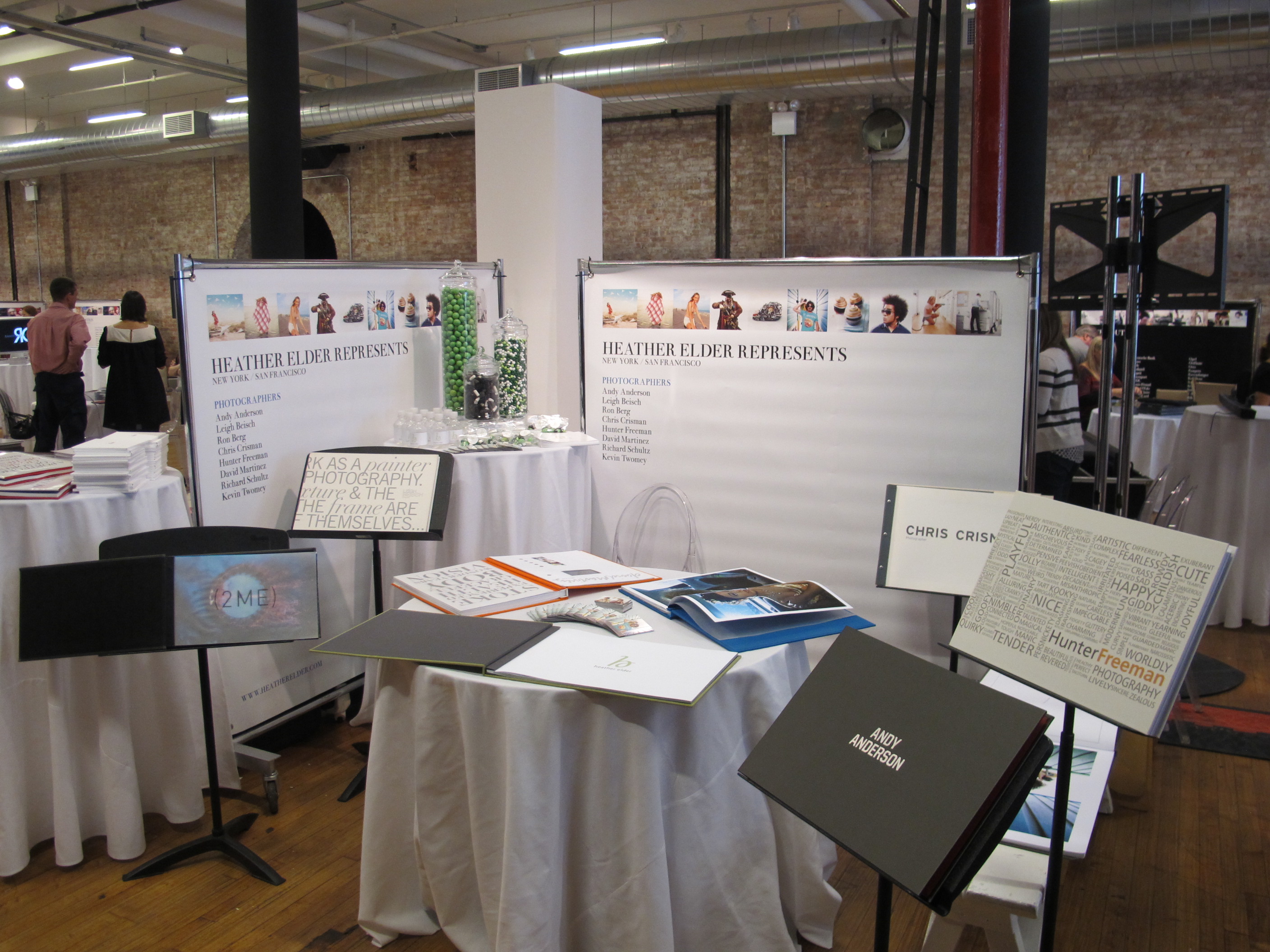
•  Our portfolios stood out among the sea of iPads and black leather portfolios. We had colorful covers that attracted people to our table. And, the interiors were well designed and always a crowd pleaser.  And, those malt balls were once again a hit.  Funny how that works.

•  Le Book does a great job of attracting people from all over, not just NY.  It was so wonderful to see our friends from Chicago, San Francisco, Minneapolis, Las Vegas, Los Angeles, Miami, Texas and of course New York.

•  The cocktail party at the end of each evening was, as always, a hit.  This year, we were in a section that was not very lively so to attract people, we decided to hire a bartender (a very hot bartender!) to mix martinis.  Between the shaking sounds of the shaker and his nice biceps, we had men and women racing to our booth.  Money well spent and a tradition we will surely continue.

•  The cocktail party is truly one of the best parts of Le Book. The energy changes slightly and made me think (well Kate Chase put the idea in my head) that Le Book should consider changing the time to the event to later in the afternoon through to later in the night.  Just when the party gets going it is time to leave.  Just a thought….

•  We also met a lot of  other rep and vendors. This is such a special part of the event.  The idea of connecting with these people as well is powerful in that can increase our community and feel less like we are operating in a vacuum.

•  Our blog was also an effective draw to the booth.  People came up to us and shared how much they appreciated the conversations we started and the information we shared.  Many people would let us know their favorite posts.   It felt good to know that all the effort we put into it pays off.

Fellow agents always ask me if I think Le Book is worth the money.  I do not hesitate to say yes, especially for the photographers.  In our group they split the cost so for them it is very affordable and a small  part of their marketing budget.  They get a lot of bang for their buck for these two events.  Let me be clear,  it is not inexpensive.  But on a per person basis it is a reasonable amount of money for the access we receive. I just wish there was more opportunity for them to experience what we do.

Now, for us.  It is much more expensive.  Between the travel, the shipping, the promos, group portfolio creation, coverage in the office, booth design, martinis and hot bartender, it is much more expensive. That said, if I look at the bottom line of what we spend and I think about who we meet and connect with, I still say YES YES YES.  There is no other event that we can see as many people under one roof whom are so open to connecting with us as at Le Book.

Lastly, I should point out that SO many people helped to make this event a success. Thank you Alex, Patrick and all of your team at Le Book – you were attentive and ON IT!  Thank you to all of our photographers for taking our to do list seriously and providing us with the tools needed to brag about your properly.  Thank you Lauranne for all the coordination, handling of missed deadlines, partnership and of course friendship (and taking a photo of me and Kurt from Glee!!).  And to Henrietta for being there beside us to help put our best NY foot forward.   To Cheryln Quan of Heat for your design help, Nicole Anderson of BookArts for your mastery of book making and Wolf Prints for providing our group portfolio with prints that rivaled all others at the event- I know this because SO MANY PEOPLE said so. And, finally to Taya Curtin http://www.nabookarts.com/ for putting up with all the travel changes and every other detail that we had to think and rethink about.

And of course, finally, to everyone who attended and brought with them an openness to make new connections and see new work.

Until the next time…..

If you like what your read, please do consider sharing and of course subscribing list so you can receive emails whenever we post something new (top right hand corner of the blog).

On the Radio with Community Table


Community Table NYC is just around the corner so what better time to provide a glimpse into what made Community Table LA so successful?  Thank you to Anderson Smith and Jillian Hayes of One Hour Photo for inviting Kate Chase of Brite Productions, Lisa Matthews of Team One and Jigisha Bouverat of TBWA\Chiat Day on air with you to discuss more about the past and future events.

If you care to listen in on what was discussed, the podcast of the show is up and running.  Here are some of the things we discussed.

•  History of Community Table and how is came about

•  Why the art producers found it valuable

•  How the community at large used the information they learned

•  Some of the questions discussed at the LA event

•  Some ideas for new questions for the NYC event.

If you are interested in reading more about the Community Table LA event, please link here for the posts.

As well, please consider submitting a question for consideration for the NYC Community Table event coming up this June, at QUESTIONS@COMMUNITYTABLE.INFO.

And, if you want to hear more from the crew at One Hour Photo you can link to their blog here.

The Community Table needs you: Submit your questions now for our next event this June in NYC.

For those of you just tuning in, Community Table  was formed from the collective efforts of Matt Nycz and Kate Chase of Brite Productions and Heather Elder and Lauranne Lospalluto of Heather Elder Represents with the idea that there is nothing more powerful in our industry than education.  Our debut event featured Los Angeles Art Producers and shared information about all sorts of topics such as how marketing has changed over the years to the email blast controversy and where creatives are finding inspiration to name a few.

It was exciting to see how many people benefited from the posts and how many appreciated a view into the Art Producer world.  The power of the Community Table was evident in the number of emails, reposts and comments the post enjoyed.

So, it is on the heels of this success that we announce Community Table NYC.  We will once again use the Le Book Connections event as a jumping off point for this NYC connection with hopes of posting the conversation in June or July.

In preparation for the event, we are soliciting questions from the community so as to be true to the spirit of the Community Table.  Since we can’t invite you all to sit at the table with us, please do consider submitting your questions for us to consider asking on your behalf.

All questions can be submitted to QUESTIONS@COMMUNITYTABLE.INFO

Wrapping up the conversation with Los Angeles Art Producers at our Community Table: Dessert

For those of you just joining us, welcome to Community Tablea series of blog posts sharing conversations held directly with our community leaders about top of mind industry issues.  Community Table was formed from the collective efforts of Matt Nycz and Kate Chase of Brite Productions and Heather Elder and Lauranne Lospalluto of Heather Elder Represents with the idea that there is nothing more powerful in our industry than education.

To see the last two week’s posts , the Appetizer and Main Course portions, and read the introduction to this series, please do link here.


——————————————–

As a reminder, each Conversation Starter was directed to one person with a general discussion ensuing. We decided this was the best way to present the discussion, to share the experience as close as possible to how it actually happened to bring you all the to the table with us.

The first question for the Dessert part of our meal was given to Jill Hundenski currently at Team One. This question launched an insightful conversation and a peek into the inner workings of the creative teams and the clear differentiation between the roles of the producers and that of the art and creative directors.

CONVERSATION STARTER #6:  Finding Creative Inspiration

Jill Hundenski, Freelance

Where are your creatives finding inspiration?  When they show you new work where are they directing you?  Are they utilizing photography websites such as At Edge,Le Book, Foundfolios and Workbook for their searches?  Or, are they relying more on individual photographer websites, micro-sites, blogs or other unique sites they frequent?

“Generally, those that are not using At-Edge, FoundFolios and Workbook are using word of mouth, this guy down the street who knows this guy,” started Jill. “It’s a lot like how Todd Selby was found. An art director found his blog and now he’s huge.

Blogs and social media are huge for creatives. They talk with each other and do a lot of research,” said Jill. “It’s kind of like, the more creative they are, the more they are sharing and following blogs and they bring it to us and we research. They bring cool art and music and things branch out from there.”

Jigisha continued. “Creatives are very competitive in their own industry and are always looking at who won awards and who is doing what ads. They ask us to research who is doing competitive work and who is shooting something.

The older creative’s are still doing CA and Archive and the award shows. The younger guys are totally out there in the social world and coming up with things that are way off our radar for sure. They’re talking about installations in Spain.”

“Photographers need to be creative and find ways to be interesting to creatives,” concluded Melanie.

With a question from Kate about the relevance of sourcebooks, the conversation looked at who is still using them and why. No surprise, art buyers still find them very valuable.

“It’s rare now that an AD would mention something they saw in Archive,” responded Jill. Melanie continued, “The search function still makes them relevant. I go to them first. I can’t start looking through blogs to find someone who shoots still-life.”

Andrea said, “It used to be that everyone got CA. But now it’s just me. Although I still have to sharpie my name on it because they want it and pass it around.”

There is still a place for the sites,” concluded Natalie Flemming. “And if you stop emailing and sending promos, you’re out of sight and out of mind. You never know who is going to look at you where, marketing is no longer linear so you have to be in as many places as you can afford

Andrea Mariash of David & Goliath very succinctly answered the first part of the last question first before getting right to the point when it comes to photographers shooting video. And the opinions were near unanimous. Photographers should really only show video if it is as strong as their photography.

CONVERSATION STARTER #7:  The Value of Photography

Andrea Mariash, David & Goliath.

It used to be that print was often a strong choice for clients when it came to promoting their brand.  Now they can choose from so many other vehicles for their communications and often times other media rather than photography is the chosen solution.  Knowing this, how do you see clients utilizing photography most nowadays?  And, along those same lines, how important is it that the photographer be able to shoot video?

In response to the relevance of photography, Andrea was clear. “Everyone can agree that there is a distinction between print and photography, because photography is used in many different mediums. And this is back to another panic button. Photography isn’t dying. I’m busier than ever because we are producing  photographic content for online. Digital is becoming a huge part of our world.”

Moving quickly to the question about video, “I just want to put something out there that is probably controversial,” started Andrea. “I am not a big fan of photographers doing video as a response to where they think the industry is going. I see a lot of photographers doing video because they think they have to, to stay ‘relevant.’ And it really hurts their brand.

Creatives will talk about it if it is not as strong as their photography. They’re used to seeing TV reels. Just like you don’t have to show everything you ever shoot, you don’t have to shoot video.”

“The big panic button was hit by PDN two years ago when they said that photographers had to shoot video,” said Matt.  “A lot of photographers thought they would be irrelevant if they didn’t.”

There are some photographers who understand film and have that cinematic quality,” continued Cara. “They have to learn new language. If they can learn it and bring their sensibilities to motion, then it’s brilliant. Creatives will talk about it after seeing their reel and it hurts them as a photographer if they show work that isn’t as strong as their photography. Art directors have choice of anyone in world.”

In retouching world, there were a lot of photographers who would do their own post and a lot who didn’t,” mentioned Kate. “And there were many who should not have done their own retouching. It’s the same threshold for video.”

“It’s more valuable for them to understand video. Art directors are not always sure how they want to use video, but they want it. There are so many different styles and sometimes they hire a DP to maintain the sensibility.”

To close our lunch, we asked everyone to go around the table and give us one word or phrase that described our industry right now. The list put words to what we all feel and left us with admiration for the group we had assembled. Positive, open-minded and ready to tackle the challenges of an industry and world in the middle of many exciting changes and tremendous challenges.

Ever-changing

Exciting

Interconnected

Progressive

Dynamic

Ever-evolving

Expanding

Changing

Cross-ideation

Learning experience for everyone

Never thought at this point that I’d really need ‘to learn that’

I’ve said ‘what’ a lot in the last two years

Dynamic

Multi-faceted

We hope that our first Community Table event has fed you insights, inspiration and a sense of shared community that help move us all upward as an industry with a sense of empowerment and adventure.   Our village is a strong one, the more we connect and share, the stronger we will be become.  Stay tuned in the next few weeks for a summary of the conversation as well as a request for questions for our next Community Table event in NYC this spring.