What do Peter Gabriel and Tom Seaver have in common? Just ask Kevin Twomey.

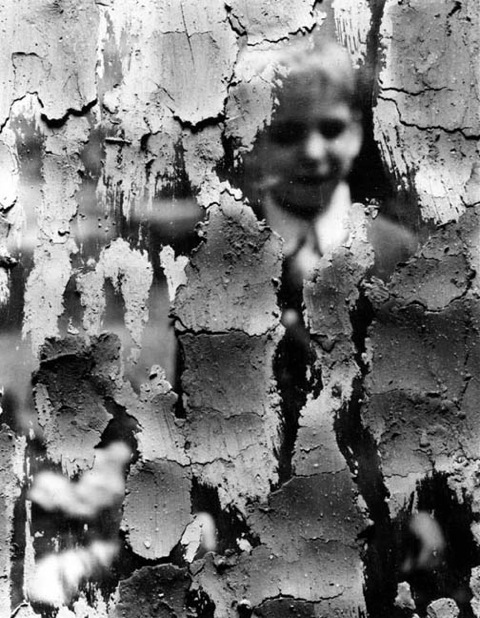
© Kevin Twomey (image from his college thesis)

I am always intrigued by what inspired photographers or who they look to as their heroes. I thought it would make for an interesting blog series so I asked our photographers the questions, “Who would you call your hero?”  Here is what Kevin Twomey had to say.

“If you had asked me who my hero was when I was 7 years old, I would have immediately answered , “Tom Seaver of the NY Mets.”  During my college years, maybe it would have been Tennessee Williams or Sebastião Salgado.

Today that is a bit more difficult to answer. It ranges from organic farmers to whistle-blowers, but in the creative realm, one person I have admired for years is the musician Peter Gabriel.

Beyond my appreciation for the catalogue of music he has created throughout his career and how he has branded himself, I have admired his passion for world music.  He was one of the driving forces behind the creation of the WOMAD festivals, as well as foundingReal World Records, a label that focuses on bringing together musicians from all over the world.

In addition, his involvement in Human Rights, starting the organization Witness to put cameras in the hands of people to document human rights violations, shows his focus is on solutions, not problems.

(In my eyes), he is truly a musician who is not just “mouthing the words.”

If you would like to contribute to our series and share who your hero is, please do email us.

In his own words: Kevin Twomey speaks of the power of the Redwoods.

once again Kevin Twomey eloquently describes for us his experience as a photographer.  This time, he describes his trip to the Redwoods with a friend.  Here is what he had to say:

“Recently, an old college friend and I embarked on a road trip to photograph the majestic redwoods up in Humboldt County. I knew these trees were old, and tall, but did not expect the humbling effect they would have on me.

My original idea was to capture the beautiful color palate of the redwood forest; the rich greens of the forest floor against the slightly warm to neutral tones of the trees, but when surrounded by these giants I decided to work in the timeless medium that is black-and-white. The forest canopy situated high above us aligned with a partly cloudy day to create a beautiful quality of light falling onto the forest floor.

The camera captures only a second out of the many hundreds or even a thousand years of its life, revealing past fires, decay and fallen trees– a recycling process measured in centuries. So much has transpired in its longevity.  Who was there one thousand years ago, to see its reedy beginnings?

The human figure, in a classic pose, offers a humbling reminder that our place in natural history may be smaller than our egos purport. This towering species dwarfs our own in both size and longevity; a coastal redwood’s average lifespan of 500-700 years is three times the age of our democracy, and far exceeds most ruling dynasties.

[My gratitude to the model, Maria, doused in insect repellent, for portraying the needed perspective.]”

© Kevin Twomey - http://www.kevintwomey.com

Everyone loves a rubber duckie.

And, of course, the rubber duckie song. Thank you Kevin Twomey for the reminder.

We have launched our stock inspiration site; a whole new way to approach looking for stock.

Over the years, art buyers and clients have reached out to us in the hopes of finding unique imagery to purchase for their projects.    Thanks to the branding we put into our original stock website people thought of us as a resource and we often got calls.

What we realized over the years was that in order for a stock website to be successful, it had to be updated constantly.  There were many times we would get requests that we fulfilled directly rather than online since the group did not have the time to keep up with the necessary updates.

Add to that the fact that Andy Anderson and Ann Elliott Cutting started their own stock site and Richard Schultz, Ann Elliott Cutting and Leigh Beisch all had images with other stock houses.  It became harder and harder to maintain a site with enough images to make an impact.

It became apparent to us that we did not need our website to be the place where someone could see every one of the available images.  We only needed to communicate that we had strong imagery for consideration so that we could get a call for a custom search.

Understanding this led to the evolution of our site from a searchable site to one that offers access to the photographer’s own image collections; even if they are available for license through independent stock agencies.

Since our site is not searchable by keyword and all searches are custom, we call our website a stock inspiration site.   It was designed with the understanding that you want deeper access to our photographers libraries and the understanding that it is difficult to search each of their personal and stock websites independently.  The purpose is to inspire clients with our images and motivate them to contact us for a customized stock photography search.

To demonstrate that we understand how clients choose imagery, each portfolio on our site illustrates a different word.  For example, in the Denial portfolio, we included images that showcase each photographer’s interpretation of that word.  Scrolling over the Licensing Info option, reveals the availability of the imagery, any relevant stock house notes and where to find more information.

When clients have a request, it is easy for them to reach us.   They are directed to click on the Contact link on the bottom of each page anywhere on the site or on the email link within the Licensing Info.  We then will create a custom search by pulling from our photographer’s images available in all of their different stock libraries.

Some have asked why we would want to send the sale away from us and to the independent stock houses.  My response to that is simple.  It is more important for us that our photographers are considered than it is for us to make the sale.  The easier we can make it for our photographers to be considered, the more it will happen.

For us, it is all about exposure for our photographers and how better to do that than to inspire the very people who are needing the imagery?

More QR Code Fun

As I mentioned in a previous post, the photographers in our group have a new perspective on their businesses and are constantly looking for new opportunities to showcase their ever evolving creative talents.  Last week, I wrote about how many of them are enjoying playing with QR Codes to hopefully engage creatives on a different level.  Hunter Freeman was the first to send out his postcard with the QR Code as part of his photograph. He has been receiving a steady stream of print requests so it has been a fun way to get instant feedback.

Kevin Twomey and Richard Schultz both also embraced the idea and have direct mail cards arriving this week.  I encouraged them both to think of an idea that was relevant to their photography and the image they chose to promote.  Here is what they came up with:

Kevin Twomey

© Kevin Twomey-www.kevintwomey.com


As is the case with many photographers, Kevin is embracing video and learning how it is relevant to his still life clients.  He has been having fun learning the technology and is looking for new ways to share what he has learned.

When he recently stumbled across Mar Glusker, a man who collects calculating machines, he knew this was the perfect opportunity to shoot both film and video. He liked the idea of not just photographing the machines but concepting an idea with the machines and the owner that utilized photography, video and sound.   He knew that together, the film and video would make for the perfect mailer and QR code reward.  With the help of Sirius Sound he directed a video that has a bit of a “STOMP” feel to it.   He is hopeful that his video is a fun payoff for those who try the scanner.  To see the link, click here.

Richard Schultz

© Richard Schultz-www.rschultz.com


Richard Schultz’s images are about finding what is most unique in a situation and capturing a moment that feels true and authentic.  He uses what he finds to create a photograph that perfectly captures the emotion of the person in their environment.  He is the true definition of a “real people” photographer.

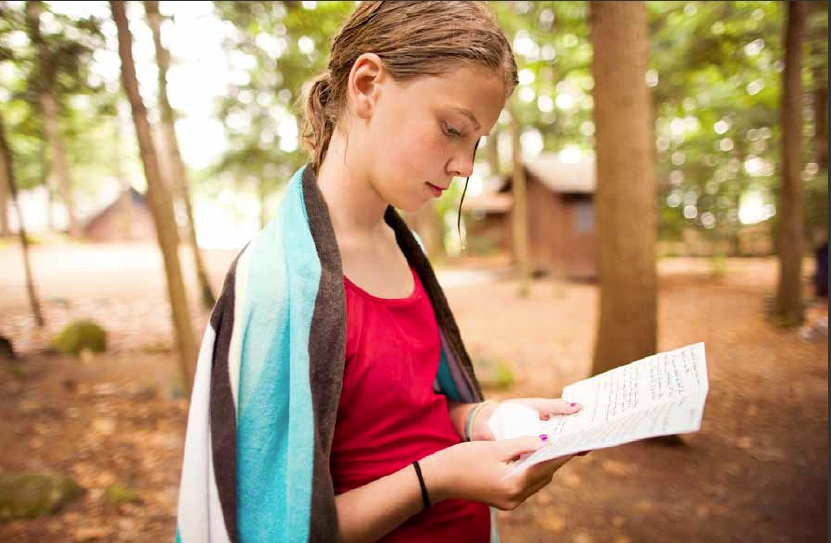
Therefore, it was not a surprise that his idea for the link from the code centered around the people he photographed for his mailer. On a recent shoot to a girls camp in New Hampshire he photographed the campers in their own setting.  He explains that “their gift to me was forgetting that I was there.  By giving me nothing, they gave me everything.”

Therefore, it is natural that Richard’s QR code links to a note from him about his experience and a more of the photographs that he took while he was there.  It is a special glimpse into a private world.  A perfect way to get us all thinking about summer.  Link here to see where the QR code takes you.  

Playing around with QR codes- our photographers try to engage with creatives on a different level

©Hunter Freeman-www.hunterfreeman.com

As I shared in a previous post, our group has evolved their mindsets to embrace the changes happening in our industry and has begun to look for new opportunities to keep their businesses evolving.  We committed to moving forward with a entrepreneurial mindset and approaching each project with a new perspective. 

 We have new glasses on and we are ready to use them.

We recognize that it is important to evolve not only our work but how we share it as well.  So, with these new glasses, we examined each of our marketing tools and tried to find unique and interesting ways to inspire creatives to engage with our work.

One tool we examined closely was the direct mail piece.  We reviewed what the current ones in our group looked like without our new glasses and then examined what they looked like with the new glasses.  If the ultimate goal is to excite the viewer and inspire them to view our websites, then we wanted to think of something that not many other photographers were doing; even if it was just for a mailer or two.

Many ideas were discussed and we decided that it would be fun to experiment some with the QR Code.  We researched the technology and realized that it was quite easy to incorporate them into the mailers.

While the codes have been successful for many companies, we wanted to be careful and not just embrace the technology for the sake of trying it out.  We didn’t want to chase a trend but find a way to make it relevant for the people who would be scanning the code.  More than anything, we knew that the user had to be rewarded with something for taking the time to participate.  We didn’t just want the code to send them to our site – they could do that on their own.  It seemed like a lot of effort for little pay out.   So, we got creative and thought of different ways to reward the viewers who took the time to engage.

Hunter Freeman’s mailer will be the first in our group to arrive on your desks.  Kevin Twomey’s and Richard Schultz’s are not far behind.  Each thought of an idea that was relevant to their photography brand and the image they chose to promote.

Hunter decided to play off of his wildly successful astronaut series and create an image that incorporated the QR code.  His quirky sense of humor made it easy for him to think of a concept that played off the original series.  When you scan the code, it takes you to a site that offers you a free print of one of the astronaut images.  Seeing the amount of emails he gets daily for prints, this seemed like a relevant reward.

For those of you who don’t want to wait for the card, click here.  Be honest though – please do not order a print if you didn’t actually scan the code.  Let’s save them for those who played the game.  (But of course, if you really must have one, let us know and we can see what we can do.)

We of course have no idea how many people will actually try out the code, but we are excited to find out.  And, please do spread the word if you like what we share with you when you scan the code.

For those of you who do not have a QR code scanner – you can easily get one in the App store if you search QR Code.

Thanks for be open minded!

Bell jars + soot + Blue Morpho Butterly = a cover image by Kevin Twomey for a post-apocoalyptic story.

© Kevin Twomey-www.twomey.com

Kevin Twomey was recently approached by  Grand Central publishing to create the cover image for critically acclaimed, bestselling author Julianna Baggott‘s upcoming novel, Pure.  After a day of playing with beautiful Blue Morpho Butterfly specimens and covering bell jars with soot, he came up with the following image for this post-apocoalyptic story, which will be released this May.

In his own words, Kevin Twomey wonders about full body scanners, firewalls and bomb detectors.

© Kevin Twomey - http://www.kevintwomey.com

I sympathize with photographers when they say they never feel like they have enough time to shoot for themselves.  There are always tests to plan, website updates to make, direct mail cards to print and calls to place.  Knowing that,  I am always extra impressed when a photographer shares with me something unexpected for them.  It tells me they pushed aside their to do lists and found the time to shoot something just for themselves.  Often times, that is worth so much more than another item crossed off of the list.  Here is a recent share from Kevin Twomey when he spent the day in the Marin Headlands.

“Just on the the other side of the Golden Gate Bridge, opposite San Francisco, lay the Marin Headlands.  It is a place where you can get to an elevation above the bridge towers to take in the beautiful panoramic views of San Francisco Bay.
Blended into the scenery, bunkers and batteries dot the landscape, revealing its military history of protecting the Pacific coast from attack.

While photographing one of the batteries recently, I could not help but think about the words “Homeland Security” and how, 70 years ago, it was represented by these massive concrete structures that housed guns that fired 25 miles out into the Pacific Ocean.  A far cry from today’s full-body scanners, firewalls and bomb detectors.”

Life Support Japan -a cause that has tremendous meaning for Kevin Twomey.

Kevin Twomey recently went to Japan to visit his in-laws.  He returned with a varied collection of striking new work that was very different than what I was used to seeing him shoot.  I thought the images were incredible and wondered about the story behind them.  I asked Kevin to write a blog entry about it.  He did and it was ready to go when the earthquake and tsunami hit on March 11.

He immediately asked to re-write his original post.  Here is what he had to say.

“My love for Japan started 16 years ago when I was visiting my college roommate’s family in Tokyo.

I remember that my first impression of Tokyo was overwhelming.  The language, the constant flow of people, the new smells, the neon lights.  It was all very unfamiliar to me.  I would wander around the city with no apparent plan while I tried to make sense of it all.  Invariably I would find myself drawn to the trains.  They felt familiar.

Japan is a train-spotter’s paradise. The Japanese take great pride in these bullets  of efficiency, and with good reason: they run fast,  surprisingly smooth and on-time.  I grew up riding regular trains and knew that even though these Bullet trains were technologically superior and more sophisticated, they had the same power and determination of the trains I grew up riding.

With my map in hand and a confused look on my face, I hopped on and let the train decide where we were to explore next.  I was immediately comforted  by how determined the train was as it snaked from one stop to the next, never deterring from its plan; much like the commuters who shared the train with me.

There is a word in Japanese, “Shoganai” which in its simplest translation means “such is life.” I find that it goes deeper in the Japanese culture and that the people embrace this word wholeheartedly.  I started to understand this while riding on that train.  As I looked around at everyone packed in like sardines I compared it to my experience on the NYC subways.  Yet here, there were no complaints, no fighting for personal space.  There was an acceptance of the situation.

As we traveled further away from the city, all of a sudden I wasn’t overwhelmed by the strangeness of the land.  From inside the train I began to appreciate the varied landscapes of the country and notice the kindness on the faces of the people.  I wanted to know more about this magical place.

And so began my love affair with Japan.

I have been back many times and each time my experiences are varied and each time I learn so much more.  I am fortunate to have married a woman whose family still lives in Japan so now when I go back to visit I get a stronger sense of the culture.  They have shared with me their deep sense of tradition and for that I am so grateful.

On my most recent trip this past February, with my camera in hand, I found myself once again drawn to the trains.  I stood at a railroad crossing and waited for the express train that runs between Tokyo and Narita airport to feel the excitement of the trains as they passed.   I watched the flow of people in the stations as they moved on to their next destination and was drawn to the swiftness of how they went about their business.   Eventually, I of course hopped aboard.

I was enamored with the energy of the day and took photos from the platform, the side of the tracks and inside the speeding train.   I captured those elusive elements that turn an ordinary commute into something dynamic;  the  passing landscape, reflections moving across windows and the kinetic energy  of the oncoming train on an adjacent track.

How could I have known that in just a few short weeks the lives of those travelers would be forever changed by a catastrophic earthquake and tsunami?  How could I have known that the places I visited would be completely devastated?  What I saw on the news conflicted with the memories of our trip that were still fresh in our minds. I felt helpless.

I immediately wanted to reach out and repay some of the kindness that the people of Japan showed to me.  A friend let me know about Life Support Japan and I knew this was a very relevant and immediate way that I could help.  It was obvious to me which images I would donate.

I am grateful that my wife’s family has survived and that we are able to communicate with them.  I am heartbroken by the stories we hear from them and the ones we see on the news.  I wonder what is next for the people of Japan.

I find comfort in knowing that just as the trains were determined and steadfast in their purpose, so are the Japanese people.  I am confident that the energy I felt when I photographed them will never leave and the people of Japan will survive.  I am looking forward to a time when I can return and witness this for myself.

Please do link to Life Support Japan and find a meaningful photograph to purchase (or even donate).  Your generosity will go a long way to supporting a country very much in need of our help.”



In his own words, Kevin Twomey talks vacuums, helmets and star dust

©Kevin Twomey

Kevin Twomey was recently inspired by something we all have in our homes but probably don’t use as much as we should!   Here is what he had to say about it.

“Sometimes design does transcend actual function of a product.   Or at least enough for me rationalize to procrastinating!    Recently, in the design of my Dirt  Devil© vacuum I saw a face, a mask, and a helmet– which brought to mind the Naval Air Squadron in CA with the nickname “Dust Devils”.

And I thought, what better way to tie into both the pilot’s helmet and the vacuum than to create a background of dust?  So in a bit of counterintuitive inspiration that rendered my weekly cleaning chores ineffective, I dumped out everything that was inside the vacuum onto my table.

Looking at the dusty cloud drifting up from this pile, I remembered some trivia I’d read about the major component of house dust being our own dead skin cells…

I was thinking that Joni Mitchell’s line in her song, Woodstock, has some relevance here.

“We are stardust
We are golden
And we’ve got to get ourselves
Back to the garden”

What do you think?